Gaming
BIC 2026: Korea's Indie Scene Grows Up
8/15/2026
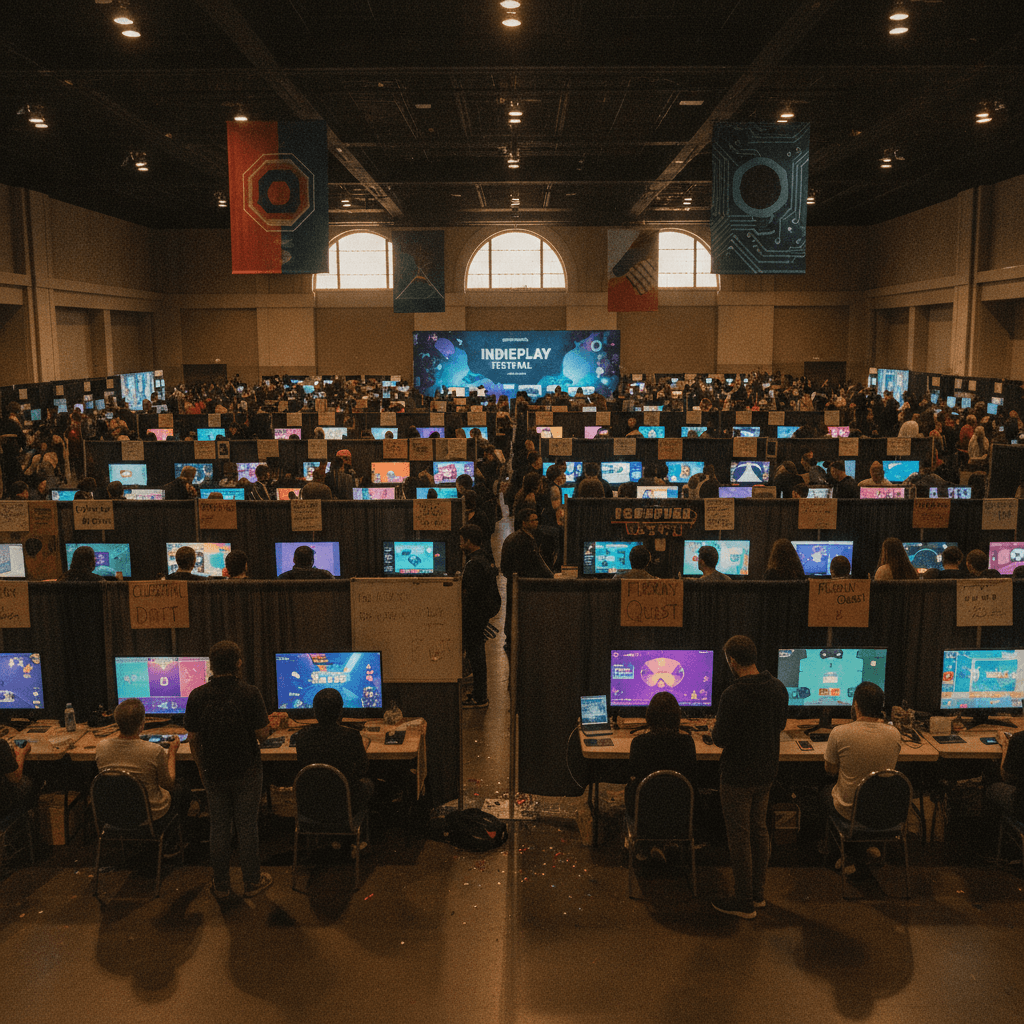
From the Land of MMOs to the Land of Strange Games
Busan Indie Connect Festival — BIC for short — is Korea's largest indie game showcase, held annually in the port city of Busan. Walking the floor at BIC 2026, the word that came up most often wasn't "blockbuster." It was "personality." The lineup was full of titles that resist easy genre labels, made by teams betting on a sharp concept rather than polish.
A good example is KILL THE WITCH, a rhythm game wrapped in deliberately trashy, low-budget-movie aesthetics — what Korean players affectionately call "B-grade sensibility," roughly equivalent to grindhouse or B-movie camp in Western terms. It trades refinement for memorability. That trade-off has become a recurring strategy across Korea's indie scene: if you can't outspend a major studio, make the thing a major studio would never greenlight because of risk.
Another entry, Snake Eagle, is currently live on Steam with two stages in early access, expanding through ongoing updates. Rather than holding back for a finished release, the team shipped an incomplete build and is growing it with player feedback.
Why Early Access Became the Default
For small Korean studios, early access is no longer one option among several — it's close to the standard path. The reasoning is blunt: a tiny team cannot survive two or three years of development with zero revenue. Selling a partial game recovers some costs and builds a community before launch day, which materially improves the odds of finishing at all.
The cost is real, though. If the initial build underdelivers, that verdict is baked into a Steam review score permanently, and recovering at full launch is difficult. In a market where first impressions are assets, deciding what goes into the initial build has become a judgment call as consequential as the code itself.
This is also why physical events like BIC still matter in a digital storefront era. On a Steam page, a game is judged by a few screenshots and a trailer. On the show floor, an attendee holds a controller and plays for five minutes. For developers, it's one of the few chances to get genuinely unfiltered feedback before shipping.
Shuhei Yoshida's Read on Korea
This year's festival featured Shuhei Yoshida, the former Sony Interactive Entertainment executive who spent years running Sony's indie developer initiatives and became one of the industry's most recognizable advocates for small studios. His assessment carries weight precisely because it comes from outside the Korean market.
Yoshida noted that Korea was long associated with large publishers building MMOs and mobile games, but that indie studios have multiplied noticeably in recent years — on each visit, he said, he encounters new companies and new teams. He closed with a message of support for Korean developers' drive.
How Much Should We Read Into That?
Kind words from a visiting figure are not an industry metric, and shouldn't be treated as one. But the shift he described does track with observable reality. Revenue in Korea's game industry remains heavily concentrated in a handful of publishers and mobile RPGs; what has genuinely widened is the number and range of titles being released. Money and creative output are simply moving at different speeds.
That gap is both a problem and an opportunity. A problem, because most indie teams still haven't found a repeatable revenue model. An opportunity, because Korea's historic weak spot — hands-on experience shipping premium, non-live-service packaged games for PC and console — is finally accumulating somewhere. Look at the credits of Korea's recent console and PC successes and you'll find a meaningful number of people who came up through indie or small-team environments.
The Question That Remains
BIC 2026 poses a fairly clear question: diversity has expanded, but has the funding and distribution infrastructure to sustain it expanded alongside?
If the games that generated buzz on the floor actually reach full release within a year, and a handful of them earn enough to fund a follow-up, the momentum holds. If the attention evaporates and the teams dissolve, BIC becomes an annual parade of first-time faces and nothing more. The second project is the test. How many teams make it to game number two will say far more about the health of this scene than any single showcase ever could.
Sources
Sources
- [BIC 2026] '풍비박산'의 B급 감성 리듬 게임, 'KILL THE WITCH'의 매운맛... — pointe.co.kr
- [BIC 2026] 요시다 슈헤이 대표 “한국 개발자들의 열정을 응원한다” — game.donga.com