Lifestyle
Why Korean Train Stations Are Filling Up With Gacha Machines
8/16/2026
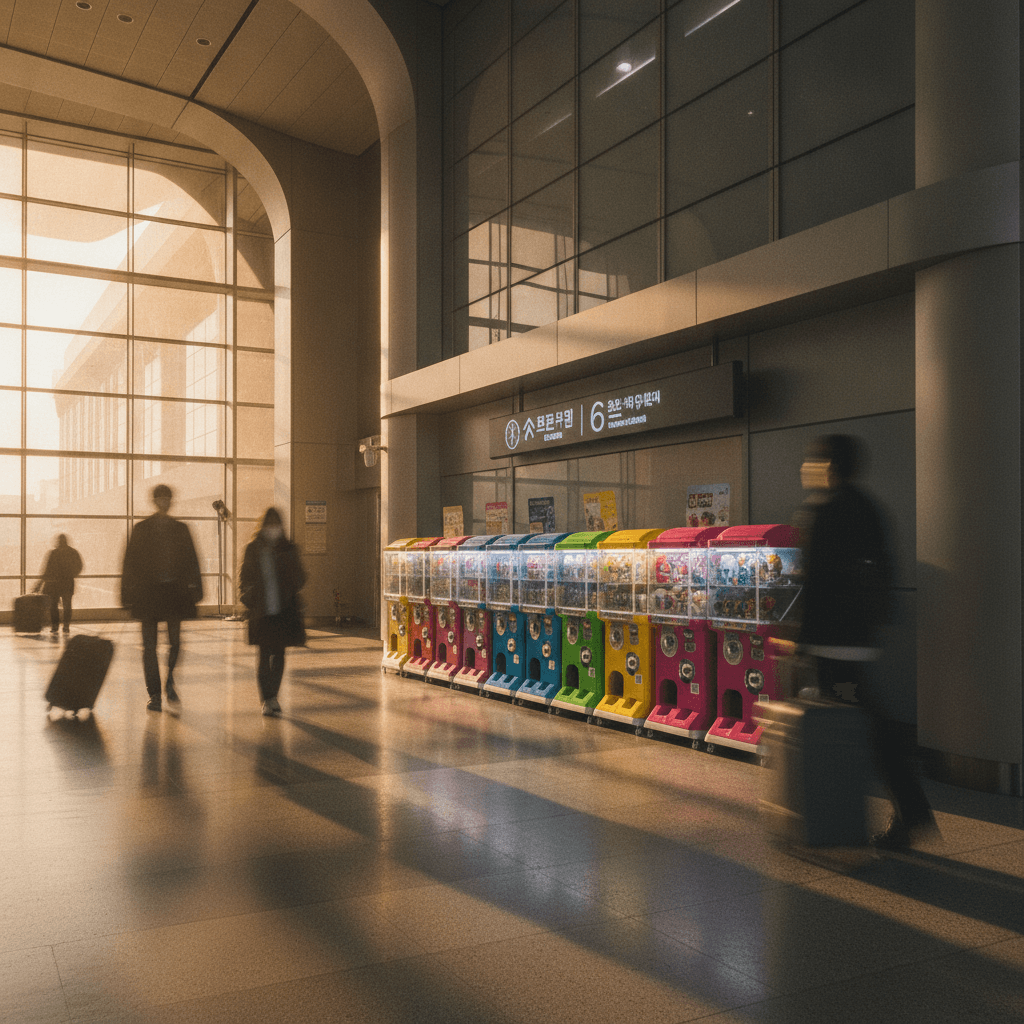
From Pass-Through to Hang-Out
For decades, retail inside Korean train stations followed a simple formula: a bakery, a coffee chain, a convenience store, and a rack of last-minute gift sets. Everything was designed for people in a hurry. But the latest round of renovations at station complexes points somewhere else entirely. The operative metric now is dwell time.
Connect Place — the retail brand operating inside several Korean rail stations, including the Cheongnyangni hub in northeastern Seoul — is expanding its gacha zone (capsule-toy vending machines) and leaning harder into short-run pop-up stores. Capsule toys earn well per square meter, but more importantly they stop people from simply walking through. If you have twenty minutes before your train, the choice between standing around and pulling one capsule is not much of a choice. And once someone stops moving, the shops next door benefit too.
Why Pop-Ups Migrate Into Stations
Limited-run dessert pop-ups showing up inside stations is not a coincidence either. A department store pop-up requires a deliberate trip; a station pop-up sits directly on someone's commute. For a brand, that means meeting tens of thousands of daily passers-by without paying for foot traffic. The typical two-week run is deliberate as well — scarcity is the marketing.
Knowing that structure makes the experience better. Station pop-ups draw their longest queues on the first weekend after opening, while weekday mornings and the final few days tend to be calmer. Signature items often sell out early in the run, so if you are after one specific product, an early weekday visit is the rational play.
Convenience Stores and "Regional Partnership" Products
Another steady trend: convenience store chains partnering with provincial governments to build products around local agricultural produce — for example, collaborations using crops from North Chungcheong Province. It connects small regional producers to a nationwide distribution network of tens of thousands of stores.
Two things are worth checking as a shopper. First, the ingredient list order. A package can say "made with apples from region X" while the actual content share is modest; Korean labeling rules list raw materials in descending order by weight, so position tells you a lot. Second, price. Regional partnership products are not automatically cheaper — a story premium is common — so comparing price per 100g against the standard version in the same category is a useful habit.
None of that makes the trend a bad thing. Farmers gain a predictable sales channel, and consumers get access to regional specialties through the most convenient retail format in the country.
Seasonal Menus Are a Timing Game, Not a Taste Game
Cafe chains rolling out chestnut, sweet potato and kabocha squash drinks while it is still hot outside is equally calculated. These autumn ingredients hit menus a month or more before they are genuinely in season, because whoever claims the "autumn" mental slot first holds it for the whole quarter.
The practical takeaway: seasonal launches concentrate their promotions — membership discounts, buy-one-get-one coupons — in the first weeks, and discounting thins out later in the run. If you plan to try one, the launch window is when the value is best.
What to Actually Do With All This
The common thread across gacha machines, two-week pop-ups and one-season menus is the same grammar: short, intense stimulation. Which means the useful consumer skill here is restraint, not avoidance.
Set a spending cap before you start on capsule toys. The randomized format is designed to make you go one more round, so deciding on a ceiling — say 10,000 won — in advance meaningfully reduces regret. With kids, agreeing on a fixed number of pulls beforehand works far better than negotiating mid-machine.
Approach station complexes by transit connection rather than by parking. Cheongnyangni sits at the intersection of several subway and rail lines, and for hubs like it, folding a visit into a transfer costs less time and money than driving.
Allow for the gap between photos and reality with pop-up and seasonal items, especially desserts, where social media imagery drives most purchase decisions. Portion size and sweetness often differ from expectations, so a small first order is the safer test.
One health note to close on: seasonal dessert drinks tend to be high in sugar. Most Korean chains publish nutrition tables in-app and in-store, and glancing at them once is worthwhile. If you manage blood sugar or have any related condition, talk it through with a qualified professional rather than relying on general advice — the realistic approach is adjusting to your own situation, not treating any single food as good or bad.
Sources
- [Weekly Retail Points] Connect Place Cheongnyangni Station strengthens gacha zone and pop-ups — Point Daily, https://www.pointdaily.co.kr/news/articleView.html?idxno=315667
Sources
- [이주의 유통포인트] 커넥트플레이스 청량리역점, 가챠존·팝업 강화…... — pointdaily.co.kr