Hyundai's $6B Bet Turns Korea's Saemangeum Into a Robotics Hub
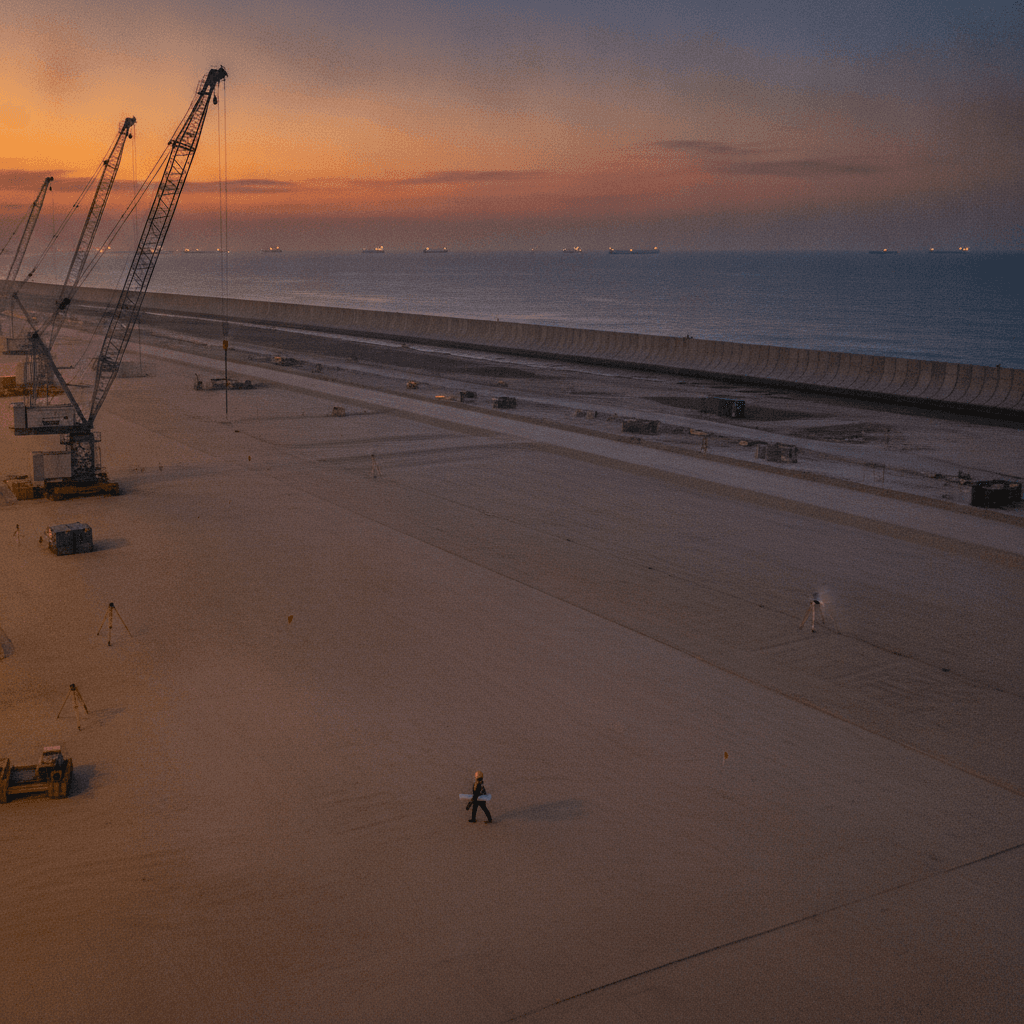
A site that was still sea a few months ago
Saemangeum is a massive land-reclamation project on Korea's southwest coast, where a 33-kilometer seawall turned tidal flats into new land. For decades it has been better known for shifting master plans — farmland, tourism, renewable energy — than for finished industry. That reputation is now being tested. According to on-site reporting, District 7, still under water months earlier, has finished site preparation for a Hyundai Motor Group project valued at roughly 9 trillion won (about $6 billion).
What matters is the type of investment. Local coverage frames the project as anchoring a robotics and AI manufacturing cluster, and the Saemangeum Development and Investment Agency has publicly described the next two to three years as the "golden time" for securing industrial land and tenant companies.
Why Saemangeum, and why now
The first reason is simply land. Advanced manufacturing tied to robotics, AI and electrification needs very large contiguous flat sites, heavy power capacity and port-level logistics at the same time. In Korea's capital region and mature industrial parks, assembling that in a short window is close to impossible. Reclamation lets Saemangeum offer newly created large-scale sites that few domestic locations can match.
The second is timing in the auto industry. Growth for carmakers has shifted from combustion-engine capacity toward electrification, software and robotics, and Hyundai Motor Group has spent years publicly positioning robotics as a core future business. Retrofitting legacy plants works only up to a point; for automation-heavy operations, a greenfield site designed around robots and AI systems from day one is often the cleaner option — which is the underlying logic of a bet this large on brand-new land.
The third is regional policy pressure. Many provincial industrial parks in Korea face weak occupancy and shrinking populations at once. A single anchor tenant pulls in suppliers, workers and infrastructure spending in a way no tax incentive can. The agency's emphasis on a narrow window reflects that this anchor effect tends to be concentrated in the first years.
How this differs from earlier Saemangeum announcements
Previous headline projects in the area leaned toward solar and wind complexes or tourism developments — low in employment density, or slow to break ground. A manufacturing anchor behaves differently: suppliers co-locate during construction, permanent staff arrive, and freight volumes appear early. In practical terms, it is a faster-visible kind of investment.
The industrial mix matters too. A conventional assembly plant in Korea would struggle on labor and logistics costs against new capacity in Southeast Asia or India. A robotics- and AI-heavy production base is far less labor-cost sensitive, which gives it a more durable rationale for staying onshore — and raises the odds that this becomes a cluster rather than a one-off factory.
What actually changes
For the region, the immediate shift is in infrastructure priorities: power supply, water, road and port links, plus housing and schooling for incoming workers. If any one of those lags, the investment schedule slips with it. So the metric worth watching from here is less the headline figure than the pace of infrastructure delivery.
For workers and engineers, the hiring profile is the open question. Automation-led plants typically tilt demand toward maintenance technicians, automation engineers and data or machine-vision operations rather than traditional line roles. Whether regional universities and vocational programs retool for that mix will largely determine the real local employment effect.
For suppliers and investors, several variables remain unresolved. Headline investment totals of this size are normally disbursed over many years, and construction milestones, product mix and supplier selection will only become clear through follow-up corporate announcements. What is already settled is that Saemangeum's development direction has been redefined around advanced manufacturing; execution over the next two to three years will decide the rest.
Sources
- "6월까지 바다였던 새만금 7공구"… 현대차 9조 채비 끝났다[르포] — v.daum.net
- '현대차 9조' 품은 새만금…로봇·AI 첨단산업 거점 '대전환' — news.mtn.co.kr
- [뉴스와 인물] 문성요 새만금개발청장 “새만금, 앞으로 2~3년이 골든타임” — jjan.kr