Tech
AI Data Centers Are Rewriting Korea's Power Plan
8/18/2026
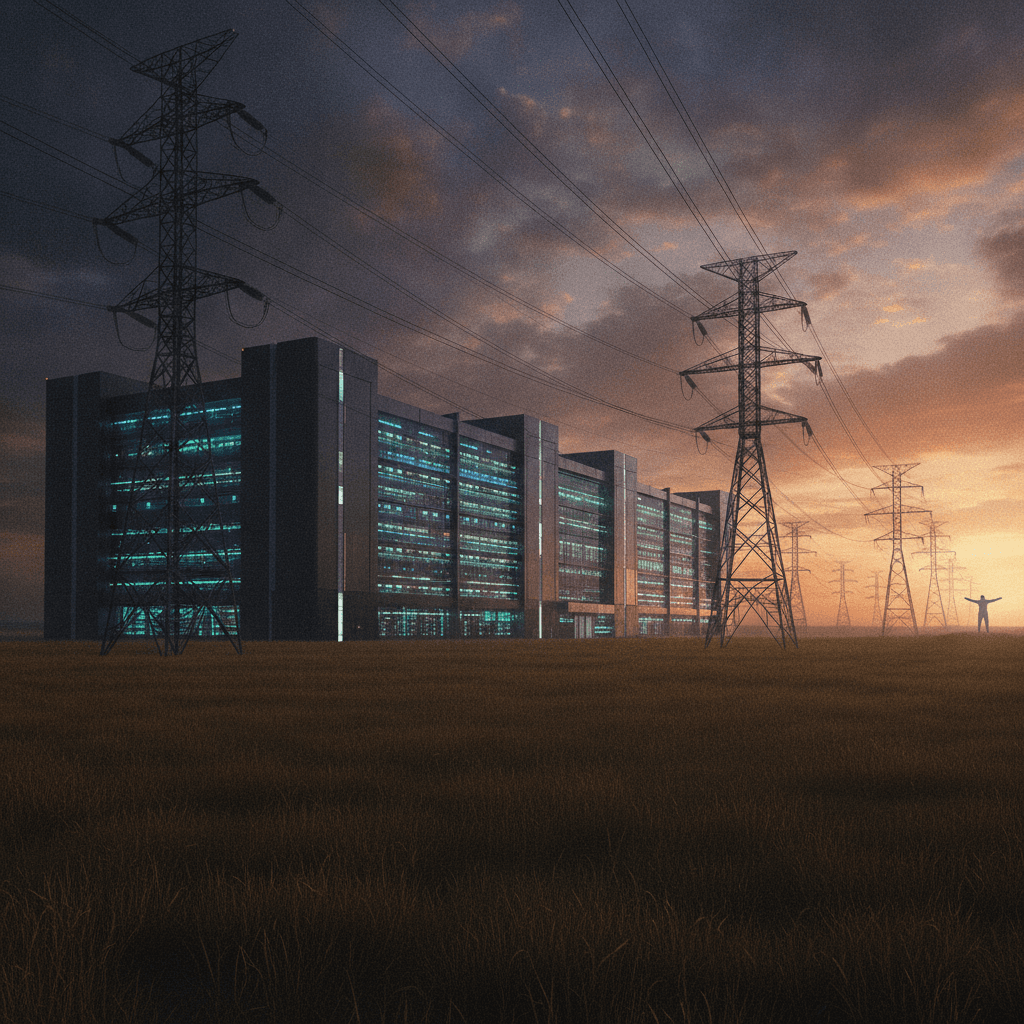
A routine planning document just became a strategic one
Every two years, Korea publishes a Basic Plan for Long-Term Electricity Supply and Demand — a technical document projecting how much electricity the country will need over the next 15 years and which generation sources will supply it. The 12th edition, now under review by the Ministry of Climate, Energy and Environment, is drawing unusual attention. Reports indicate it may include an expansion of LNG generation, and the reason is straightforward: semiconductor industrial complexes and AI data centers are pushing demand well past earlier projections.
There's a second pressure point. If Korea holds to its direction of phasing out coal generation by 2040, the retiring capacity has to be replaced. Demand rising while existing supply retires is a squeeze from both ends.
Why this is happening now
For years, Korean demand forecasts assumed modest growth. The population is flat and manufacturing energy efficiency had been improving. Two developments broke that assumption.
The first is the semiconductor buildout. The large-scale clusters being developed around Yongin, south of Seoul, involve fabs whose individual power draw approaches that of a small city. Chip fabrication runs continuously, and once cleanroom HVAC and ultrapure water systems are counted, the power density per square meter is extreme.
The second is AI infrastructure. Conventional internet data centers ran at a few kilowatts per server rack. Racks packed with GPUs for AI training and inference run at many times that. A tenfold jump in rack density means the same building footprint now requires a fundamentally different grid connection. For planners, a gently sloping demand curve has turned into a staircase.
Why LNG keeps coming up
In principle, renewables and nuclear should absorb the new demand. Both, however, have timing problems. Nuclear takes well over a decade from licensing to commercial operation. Solar and wind are bottlenecked less by hardware than by grid interconnection queues and siting approvals. AI data centers and fabs, by contrast, get built in two to three years.
Combined-cycle gas plants fit that gap. They are relatively quick to build and can ramp output fast, which also makes them useful backup for intermittent renewables. The drawbacks are unchanged: fuel cost volatility and import dependence. LNG prices react immediately to geopolitical events, and fuel dominates the cost structure of gas generation. Emissions are lower than coal but far from zero. Expanding LNG is less a solution than a way of buying time.
How this compares internationally
Korea is not alone. In the United States, data center clusters have strained regional grids to the point where utilities have delayed retiring fossil plants, and hyperscalers have signed power purchase agreements tied to restarting nuclear capacity. Dublin, Ireland effectively froze new data center grid connections after the sector's load became politically untenable.
Korea's distinctive problem is geographic. Generation sits on the coasts, demand sits in Seoul. Much of the country's generating capacity is located in coastal and provincial regions, while consumption concentrates in the capital area. The real bottleneck is often transmission lines rather than raw generating capacity. That makes the transmission and substation build-out in the 12th plan at least as consequential as the generation mix — and it makes "distributed energy" policy, which nudges large loads toward regions with surplus power, a live question. Whether data centers get built near users or near generators depends heavily on how siting incentives are designed.
What actually changes
For industry, power availability has become a siting constraint on par with land and permitting, sometimes above them. Whether a grid connection is available, and how long the queue is, now shapes investment schedules directly. Competition to lock in sites with confirmed interconnection capacity is a reasonable expectation.
For consumers, the question is tariffs. A larger LNG share makes generation costs more sensitive to international fuel prices. Separately, there is an unresolved argument about who pays for the grid reinforcement that large new loads require. Charging heavy new connections a greater share of those costs is one option that could surface, and it is likely to become a flashpoint in future tariff reform debates.
For policy, three goals — supply security, affordable rates, and decarbonization — are now colliding directly. When the final numbers of the 12th plan are published, they will reveal which of the three the government prioritized. The demand forecast and the generation mix will effectively define the physical ceiling on Korea's AI and semiconductor ambitions for the rest of the decade.
The takeaway
AI looks like a software race, but underneath it is a competition for electricity, land, and cooling water. Korea's power planning debate makes that unusually explicit. Three things are worth watching: how aggressively the demand forecast is raised, what fills the gap left by retiring coal, and who ends up absorbing the cost.
Sources
Sources
- 메가프로젝트發 전력수요 급증…12차 전기본에 LNG발전 확대 담기나 — newsis.com