Naver Cloud Launches Free Security Self-Check for Businesses
What Happened
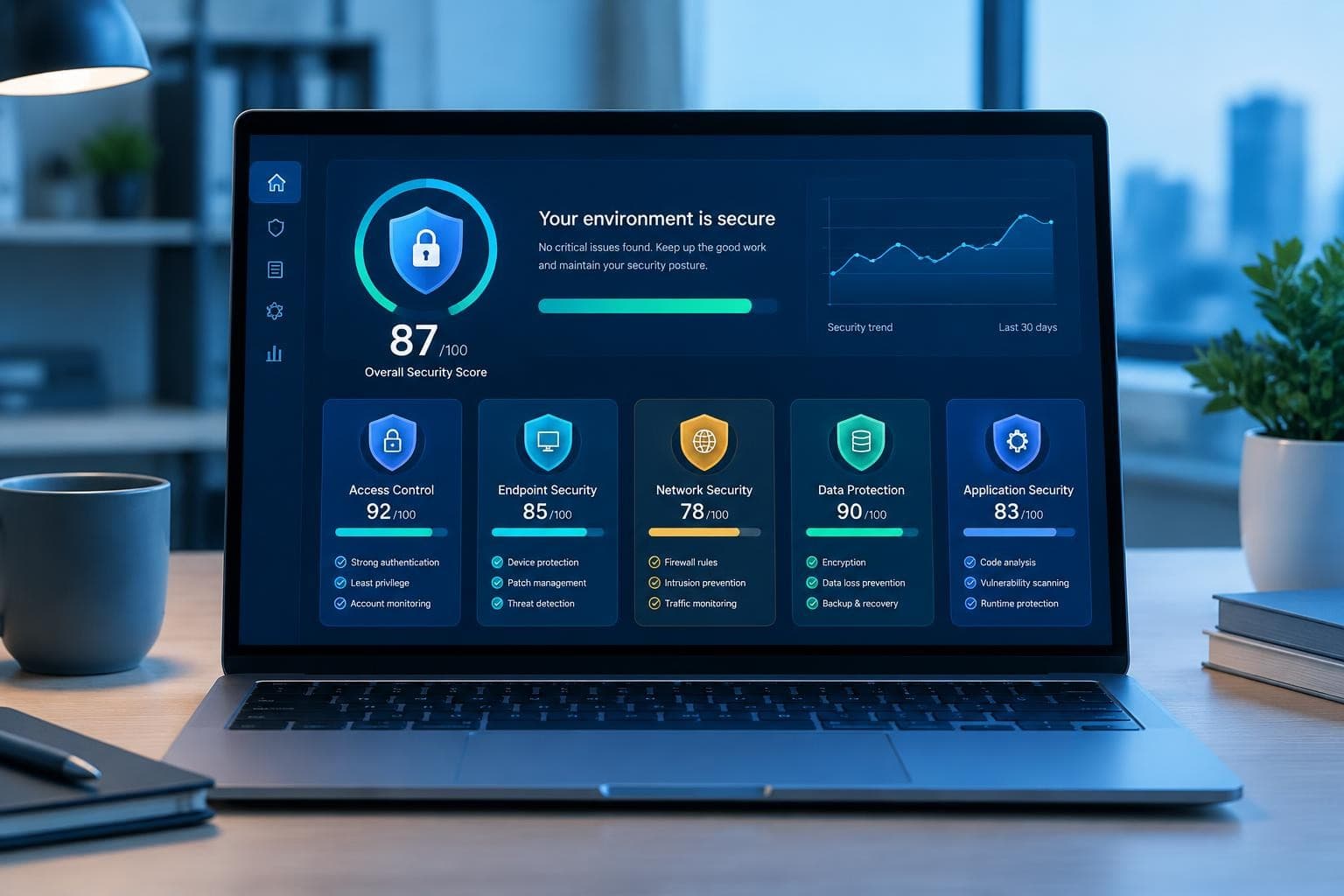
Naver Cloud — the cloud computing arm of Naver, South Korea's dominant search and internet platform company — opened a free security self-assessment site for businesses on October 19. There's no login, no company registration, and no information submission required; anyone can open the page and answer the questionnaire.
The assessment consists of 7 categories and 21 questions, covering areas such as network security that commonly create exposure in corporate IT environments. Based on the answers, it flags which areas appear weakest. Naver Cloud says the questions were built on its own cloud and security technology plus its operational experience running live services.
The notable addition is a section on data leakage risk from AI usage. As employees increasingly paste internal documents, source code, and customer data into generative AI tools, this has become a risk category that most older security checklists simply don't address.
Why This Is Appearing Now
For many Korean companies, the real bottleneck in security isn't a lack of technology — it's the absence of dedicated security staff. At small and mid-sized firms, there is often no security officer at all, or the role is tacked onto whoever runs IT systems. Such organizations struggle with the very first question — "where exactly are we weak?" — and external consulting carries meaningful cost and time barriers.
Meanwhile, a string of large-scale data breaches and ransomware incidents in Korea over recent years has raised executive-level attention to security spending. But attention only converts into budget after someone establishes a baseline assessment. Lowering the barrier to that step is essentially what this service does.
The AI section has an equally clear rationale. "Shadow AI" — employees adopting external AI services before any internal policy exists — is a pattern observed across companies globally, not just in Korea. Most legacy security checklists predate it entirely.
How It Differs From Existing Checklists
Self-assessment checklists from government agencies and security vendors have existed for years in Korea. But many arrived as downloadable PDFs, required agency membership or corporate data submission, and ran long enough that busy IT staff abandoned them partway.
Naver Cloud went the opposite direction. 21 questions, no signup is a design that prioritizes getting people to actually finish it over diagnostic precision. The tradeoff is real: 21 questions cannot accurately measure an organization's security maturity, and this is not a substitute for formal consulting, penetration testing, or vulnerability assessment.
It's also worth naming that the tool functions as a customer acquisition channel. A company that discovers a weak area through the free check naturally starts evaluating products for that area — and Naver Cloud's own security offerings sit among the options. This mirrors how global cloud providers have long distributed free security assessment tools. That's not a criticism, but users should factor it into how they read the results.
What Actually Changes for IT Teams
For an organization with no security personnel, the practical value here is less the score and more a concrete argument for executives. Saying "I'm worried about our security" lands differently than presenting a result showing specific weak categories out of seven — especially in a budget conversation.
The AI questions are particularly useful for companies that still have no internal AI usage policy. Simply reading what's being asked gives you an outline of what a minimum viable AI guideline should contain. Rather than treating the output as authoritative, the more realistic use is to lift the question list itself into your own internal review checklist.
Sources
- 네이버클라우드, 기업용 무료 '보안 자가진단' 사이트 개설 — yna.co.kr
- 네이버클라우드, 기업 보안 자가진단 서비스 출시 — biz.chosun.com
- "우리 회사 보안, 얼마나 안전할까"…네이버클라우드, 무료 진단 서비스... — newsis.com
- 네이버클라우드, 기업용 '보안 자가진단' 오픈 — biz.sbs.co.kr
- “AI 쓰는데 보안은?” 네이버클라우드, 무료 자가진단 — mydaily.co.kr