Lifestyle
Seoul's City-Run Singles Event: What to Know Before Applying
8/17/2026
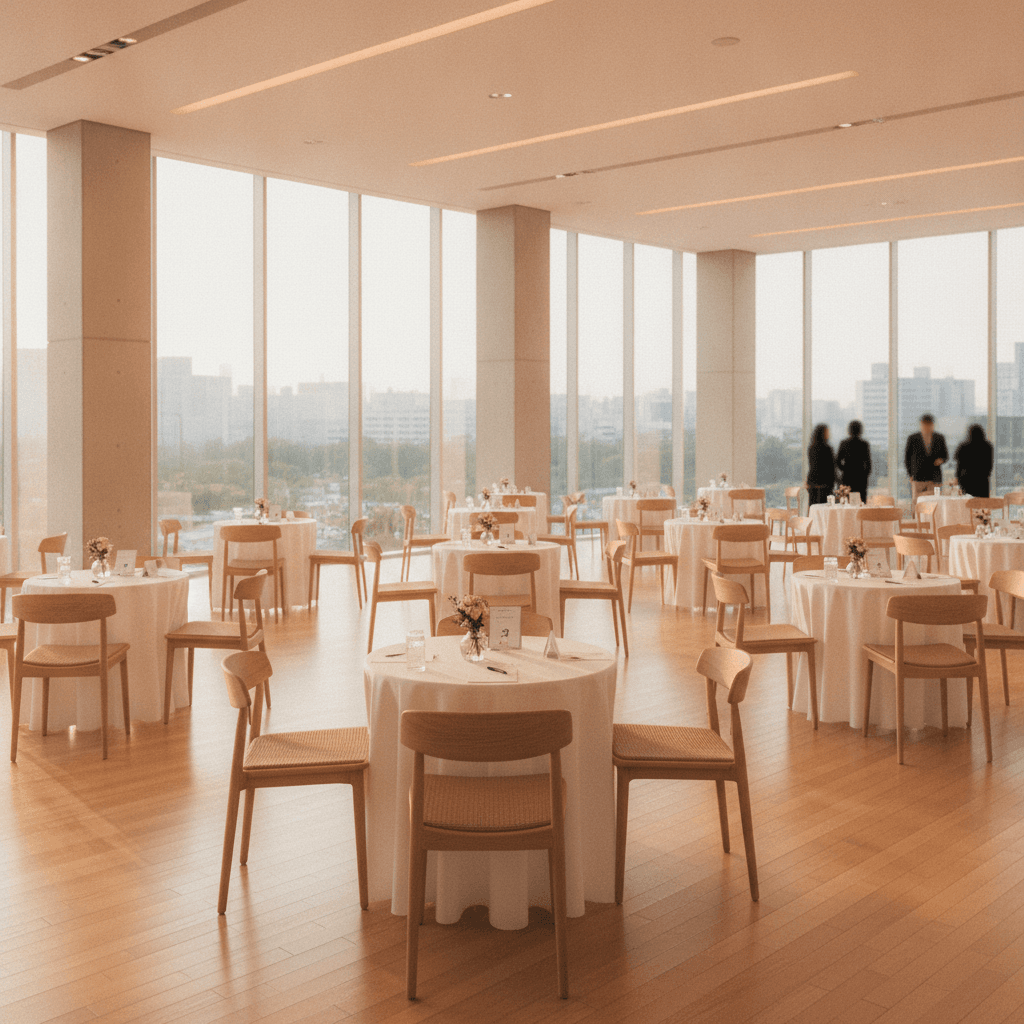
Seoul is hosting a matchmaking event — again
The Seoul Metropolitan Government and Shinhan Card, one of Korea's largest credit card issuers, are opening applications for another singles meetup. This is the third edition of the program, following two rounds held last June and November. The repetition matters more than the event itself: this is no longer a one-off publicity stunt but something drifting toward a recurring city service.
The eligibility rules are straightforward. Applicants must be unmarried, aged 25 to 45, living in Seoul, and economically active — meaning employed or otherwise earning. Fifty men and fifty women will be selected. Applications close at 5 p.m. on September 4, and they're submitted through a Seoul city platform dedicated to pregnancy, birth, and childcare information.
The numbers tell you what kind of event this is. A hundred people total is not a festival; it's closer to a structured small-group format where participants can actually talk to each other. The flip side is that if applications surge, selection becomes competitive and organizers will need to verify those eligibility conditions.
Why a city government runs blind dates
Korea's total fertility rate has been among the lowest in the world, and municipal governments have started treating "opportunities to meet people" as a policy problem rather than a private one. The fact that applications go through a childcare-and-birth information portal — not a general events page — tells you exactly which policy drawer this initiative sits in.
The public-private structure is also worth noting. A card company brings operating budget and event know-how; the city brings credibility and reach. For applicants, the practical upshot is a low cost of entry compared with commercial matchmaking services in Korea, which can be expensive and heavily screened.
Whether these events actually move the needle on marriage rates is another question, and reasonable people disagree. A few hundred-person gatherings won't reverse a demographic trend. But the individual calculation is separate from the policy one: for a single person in Seoul, this is a vetted, low-risk way to meet strangers, and that has value regardless of the macro numbers.
How to prepare for a government-run singles event
1. Check the eligibility documents early
Residency, age, marital status, and employment all factor in. Proof of residence and employment is likely to be required, so figure out in advance how to obtain a residence certificate or employment verification letter. In Korea most of these can be issued online, but not always instantly.
2. Remember the deadline as a time, not a date
Applications close at 5 p.m., not midnight. Public-sector deadlines in Korea often align with the end of the business day, which quietly removes half a day from your buffer if you assumed otherwise.
3. Prepare two or three conversation openers
With a hundred participants, the format almost certainly involves short rotations. In that setting the deciding variable isn't your résumé — it's the first two or three minutes. Have a few easy, returnable topics ready: something you watched recently, what you do on weekends, your neighborhood. Anything the other person can answer without effort.
4. Set realistic expectations
Going in determined to meet "the one" mostly generates pressure. A more useful benchmark: did you have two or three genuinely comfortable conversations? Across every kind of matchmaking format, the share of introductions that turn into relationships is modest — that's the baseline, not a failure.
5. Decide your own safety rules in advance
The event itself is supervised, but everything after it is private. Decide beforehand at what point you'll share contact details and where a first one-on-one meeting would happen. A public place for first dates is a rule that never stops being useful.
Missed it? There will probably be another
The word "third" is the most informative detail in this announcement. Two rounds last year, another this year — that's the shape of a program settling into a schedule rather than winding down. Not qualifying or not being selected this time isn't the end of the road.
If the concept appeals to you, it's worth looking beyond Seoul. Several Korean local governments run comparable programs, with different age brackets, sizes, and formats. The healthier framing is to treat these as one option among several, not as a social experiment you're being enrolled in. Use it if it fits; look elsewhere if it doesn't.
One last practical note: read the official announcement before applying, not just the news coverage. Press summaries compress things, and the precise eligibility criteria, required documents, and contact point for questions live only in the official notice. Write down the deadline and the inquiry channel while you're there.
Sources
Sources
- 신한카드, 서울시와 '미혼남녀 만남' 행사 협업 — joongangenews.com
- 신한카드, 서울시와 미혼남녀 만남 행사 세 번째 개최 — newsian.co.kr