Gaming
Chinese Action Games Shake Up Korea's Steam Charts
8/14/2026
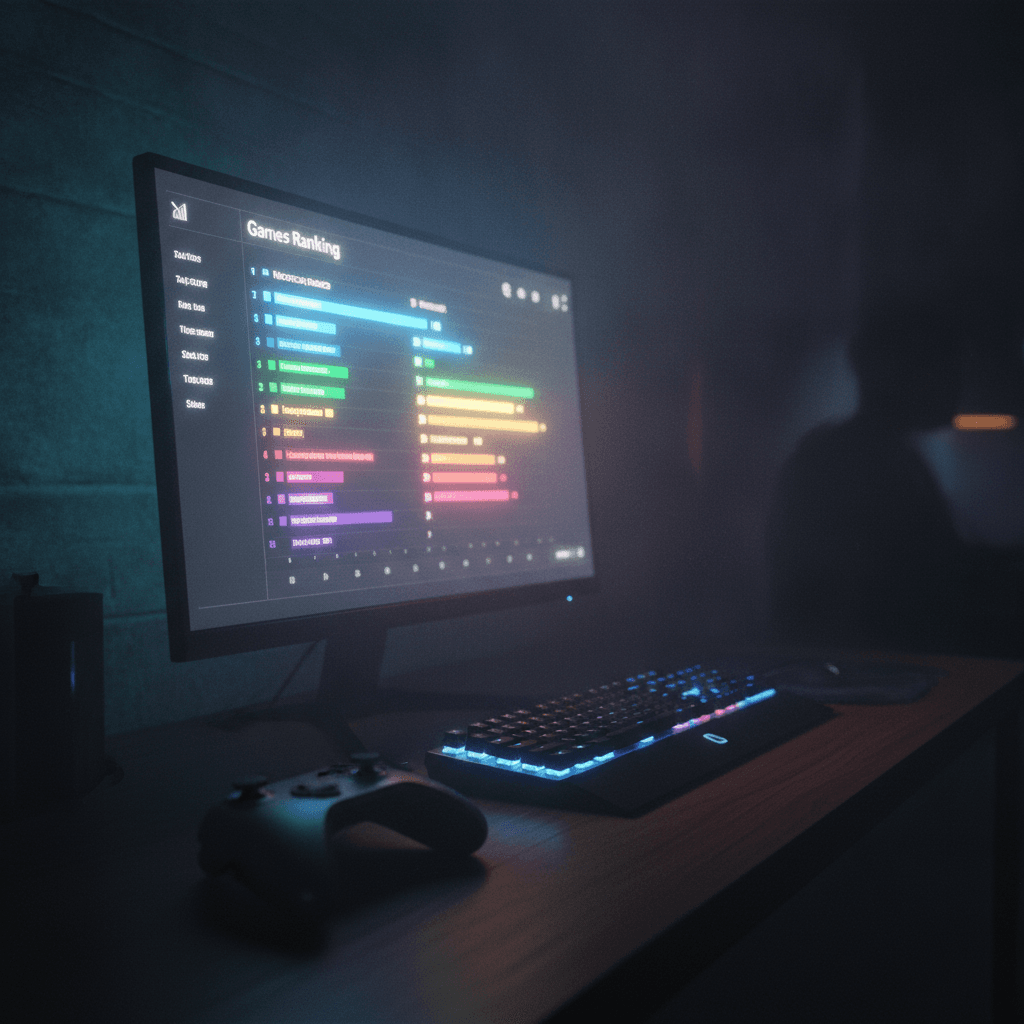
Two Different Stories: A Calm Mobile Chart, A Volatile Steam Chart
Korea's weekly game rankings this week split neatly along platform lines. On mobile, things were quiet. Sol: Enchant held the No. 1 spot on Google Play's top-grossing chart, with little movement among the titles below it. On PC — specifically Steam — the picture was the opposite, with rankings reshuffling almost daily.
The standout development on Steam was the presence of Chinese-developed action games. Phantom Blade Zero, a stylish action title from Chinese studio S-Game, rode post-launch momentum into the top of the revenue chart. Alongside it, Black Myth: Wukong — the 2024 breakout hit that became China's first genuinely global AAA success — re-entered Korea's Steam top five after running its first 30% discount.
How Much Does a Discount Really Mean?
Steam's top-selling chart is based on revenue, which makes discounting the single most reliable lever for climbing it. When a price drops, buyers who have been sitting on the fence convert all at once, and the chart reflects that within a day. The catch is durability: a post-sale drop-off is so consistent it's practically a rule.
That means a discount-driven ranking doesn't prove a game is currently popular. What's actually informative is the size of the spike. A steep jump signals that a large pool of interested-but-unconverted buyers is still out there — meaningful brand awareness that survived long after launch week. A game that returns to the top five on its first discount, months after release, is telling you something about its cultural staying power.
New Releases Sitting Next to Long-Running Hits
Korea's Steam top ten this week mixed titles of completely different vintages. Established multiplayer games — Palworld, Once Human, Apex Legends, and Dead by Daylight — occupied roughly sixth through eleventh place, with newer entries like Gadius and Sepiria slotted in between. This mix is structurally normal for Steam, but it also illustrates how hard it is for a new release to hold a high position for more than a couple of weeks.
Live-service and multiplayer games have a built-in mechanism for revenue revival: seasonal updates, battle passes, and return events reset the cycle every few months. Premium single-player games follow a different curve — a large launch spike, a long taper, and periodic rebounds that happen only when the price drops. Both models are visible on the same chart at the same time.
Reading the Rise of Chinese Development
For Korean players, the perception of Chinese games was, until fairly recently, shaped by mobile idle and gacha titles. That framing no longer holds. High-budget action games out of China are now competing head-on in Western and Korean markets and landing near the top of the charts with some regularity. A step change in production scale is showing up in the numbers rather than just in press releases.
Still, it's premature to call this a takeover. A Steam revenue chart is a snapshot of spending at one moment; it says nothing about long-term player retention or community health. The real test comes at the three- and six-month marks — concurrent player retention, the quality of post-launch content, and whether the studio can ship a second game at the same level. This week's chart is a starting line, not a finish line.
What Korean Studios Might Take From This
For Korea's game industry, the trend is both a competitive threat and a useful reference. Big-budget premium action games have historically been a category Korean publishers avoided, because development costs are high and the payback is less predictable than a live-service mobile title. That's been changing: Korean studios have visibly increased their console and PC premium output in recent years, and those projects are now reaching the market.
The deciding factor isn't genre selection, though — it's execution. Launch-day polish and performance optimization shape early sentiment far more than a cinematic trailer does. The first two weeks of reviews and word of mouth effectively set the long-term sales curve, a pattern that recent launches on both sides of the success spectrum have confirmed.
A Practical Way to Use Weekly Charts
If you're a player rather than an analyst, there are three simple habits worth adopting. First, when a title jumps sharply on the revenue chart, check whether it's on sale before assuming it's suddenly popular. Second, look at concurrent player counts alongside revenue rank — that combination separates genuine momentum from a one-off pricing event. Third, if a game is sitting on your wishlist, it's usually worth waiting for a seasonal sale rather than paying full price right before one.
Ultimately, a chart is a mirror showing where money is going right now. This week's reflection is clear enough: pricing and novelty drive the rankings, but only sustained content keeps a game there.
Sources
Sources
- [주간 게임 순위] '솔: 인챈트' 구글 1위 독주…차트 뒤흔든 '팬텀 블레... — popcornnews.net
- [스팀체크] 中 게임 기세 무섭네, 하루 만에 스팀 매출 1위 팬블제+할인... — inven.co.kr