Bucheon Leaks Data on 17,000 Residents, Noticed 6 Days Late
What happened
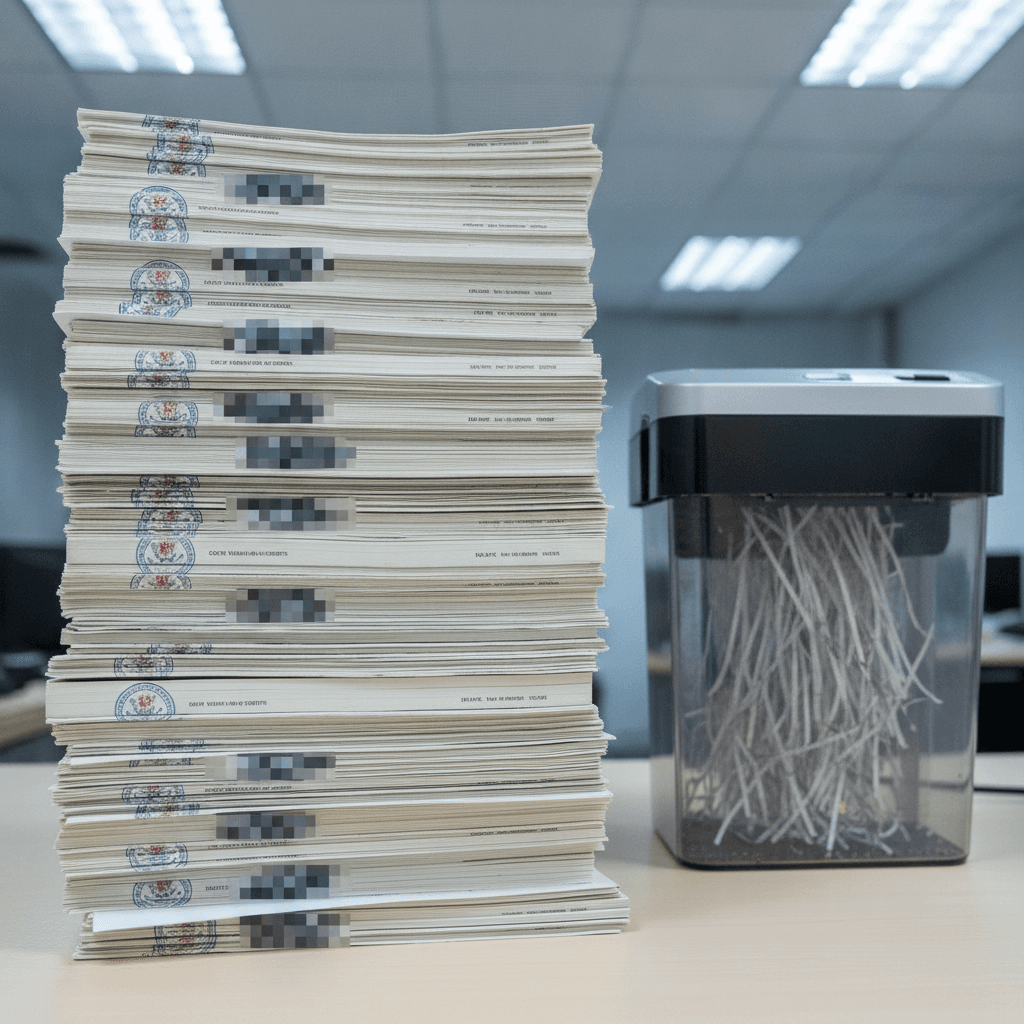
Bucheon, a city of roughly 800,000 in South Korea's Gyeonggi Province just west of Seoul, exposed the personal data of about 17,000 residents during a routine resident survey. The leaked records reportedly included full names, resident registration numbers (Korea's national ID number), household addresses and mobile phone numbers. The data escaped not through a hacked server but through paper: survey materials were handed out to tongjang, the neighborhood-level volunteer representatives who handle door-to-door administrative tasks in Korean local government.
The timeline is the damaging part. The materials were distributed on the 10th, but the city only became aware of the exposure at around 5:10 p.m. on the 16th — six days later. It moved quickly after that: recall requests went out to the neighborhood leaders at 5:30 p.m., and the city says every copy was retrieved and destroyed by 10:10 p.m. the same day. The response took five hours. The detection took six days.
Why it matters: "fully recovered" is not the same as "contained"
Paper is one of the hardest leak vectors to close. A breached server leaves access logs; a printed roster leaves nothing. There is no technical way to confirm who read a document, whether anyone photographed a page, or whether a copy was made before the originals came back. Recovery does not equal containment — the city's assurance rests entirely on the after-the-fact accounts of the people who held the documents.
The deeper failure sits upstream. Korea's Personal Information Protection Act treats the resident registration number as a distinct class of unique identifying information that can only be processed where a specific legal basis exists, and requires safeguards such as encryption or masking even when it is lawfully held. If full 13-digit ID numbers were printed onto rosters meant for distribution to volunteers, the problem began at the document design stage, not at the moment of distribution. A single masking step before printing would have changed the severity of this incident entirely.
How public-sector leaks differ from corporate ones
When a private service leaks your data, you can at least close the account and change your password. Data held by a local government is not something a resident can opt out of. Korea allows resident registration numbers to be changed, but only through a formal process requiring proof of exposure-related harm; meanwhile the name-address-phone combination stays on file for administrative purposes regardless of the individual's wishes.
That specific combination — legal name, national ID number, home address and mobile number — is close to a complete toolkit for voice phishing and identity fraud in Korea, where the resident registration number is still widely used as an authentication anchor. Compared with the tens of millions of records lost in Korea's large financial-sector breaches of the past decade, 17,000 looks small. But risk scales with the sensitivity of the fields, not the row count. A leaked ID number is not a leaked email address.
What affected residents should do
Even with no immediate sign of misuse, a few defensive steps are worth taking: enrolling in identity-theft protection or credit-inquiry alerts through a bank or credit bureau to catch accounts opened in your name, and activating a carrier-level subscription block to prevent fraudulent mobile line activations. Residents should also be alert to a predictable second wave — calls offering "breach compensation" are a standard follow-on scam that exploits the victim's awareness of the original incident.
The questions that remain
Based only on the confirmed facts, three things deserve scrutiny: why ID numbers appeared on a document intended for external distribution at all, how an approval and review process let six days pass without anyone flagging it, and by what method the city verified that no copies or photographs were taken before recovery. The fix is control at the printing stage, not faster recall. Retrieving every copy within five hours is a decent emergency response; never generating the document in that form is the actual solution.
Sources
- 부천시, 주민 1만 7000여 명 개인정보 유출 — gukjenews.com
- 부천시, 주민 조사 중 1만7천여명 개인정보 유출...전량 회수·파기 및 ... — sisunnews.co.kr