Googlebook: Google's Gemini Laptop Runs on Snapdragon
What happened
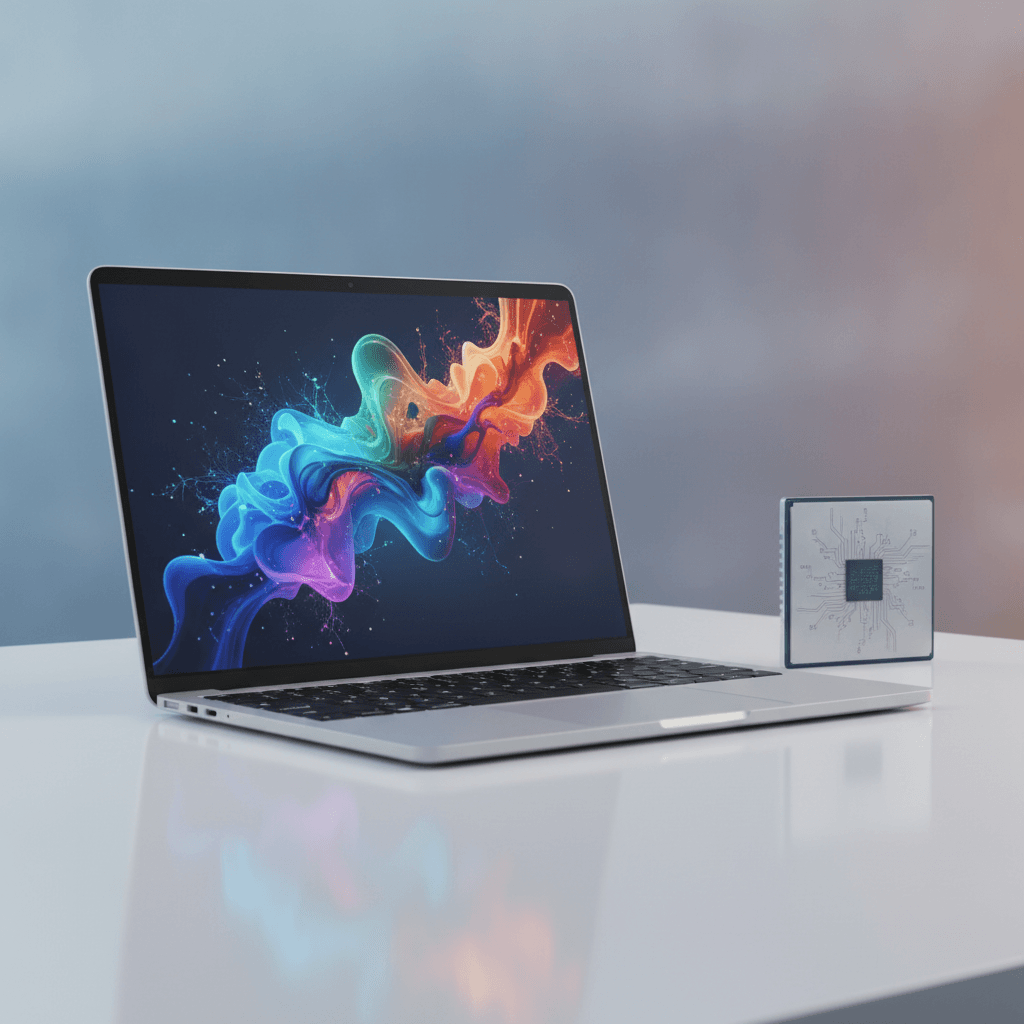
Google has unveiled a self-branded laptop called Googlebook and opened pre-orders, built in partnership with Qualcomm. Two details matter most: it runs on Qualcomm's Arm-based Snapdragon X Elite processor, and Google's Gemini AI model is integrated at the operating-system level rather than bolted on as an app.
Qualcomm is positioning the chip as specifically tuned for Gemini-driven intelligent features — meaning the on-device NPU (neural processing unit) is meant to handle a meaningful share of AI work locally, not just relay everything to the cloud.
Why now
The launch sits at the intersection of two shifts in the PC market. The first is Arm's arrival in mainstream PCs. After Apple moved the Mac to its own M-series silicon, it became hard to argue that high-performance, low-power laptops require x86. Qualcomm's Snapdragon X line has been the attempt to bring that same proposition to the Windows and Android side of the industry.
The second is the race to make an AI assistant the default entry point to the OS. Microsoft made that bet with Copilot+ PCs, Apple with Apple Intelligence. Google has had a hardware presence for years through Chromebooks, but that brand is widely associated with low-cost education devices. Googlebook reads as a premium hardware re-entry justified by AI.
How it differs from a Chromebook
The Chromebook thesis was simple: if the browser runs well, that's enough. Push computation to the cloud, keep the bill of materials low. Googlebook inverts that, because running Gemini locally presupposes real NPU capability — which typically pushes specs and price upward. Here, AI performance becomes the headline spec.
The partnership structure differs too. Chromebooks are a reference platform manufactured by many OEMs. Googlebook carries Google's own brand and was co-engineered with Qualcomm at the silicon level, which puts it closer to the Pixel phone playbook than to Chrome OS licensing.
What it means for buyers
The practical change is that shoppers now face a third camp when choosing an on-device AI laptop. Until now the choice was effectively Copilot+ PCs or MacBooks. For anyone whose workday lives inside a Google account — Docs, Gmail, Drive — a machine with Gemini wired into the OS has an obvious convenience argument.
The open question is the same one Arm PCs have faced for years: app compatibility. Snapdragon-powered Windows laptops have repeatedly drawn criticism for gaps in native support among professional software and games. Which OS and runtime environment Googlebook ships with, and how gracefully it handles existing desktop applications, will likely decide whether the hardware feels fast in demos or fast in daily use.
Since this is only the pre-order stage, pricing, full specs, and independent battery and performance benchmarks still need verification. First-generation AI hardware has a track record of a gap between staged demos and everyday experience, so waiting for measured reviews is a defensible strategy over pre-ordering.
Sources
- 퀄컴·구글 AI 동맹…제미나이 품은 PC '구글북' 전격 공개 — zdnet.co.kr
- 구글, AI 기반 Googlebook 노트북 사전 주문 개시 — kr.investing.com
- 퀄컴 스냅드래곤 X 엘리트, '구글북' 탑재…제미나이 인텔리전스 최적화 — etnews.com