Auto
Korea's Biggest EV Fire Heads to Court: A $23M Claim vs. Mercedes
8/29/2026
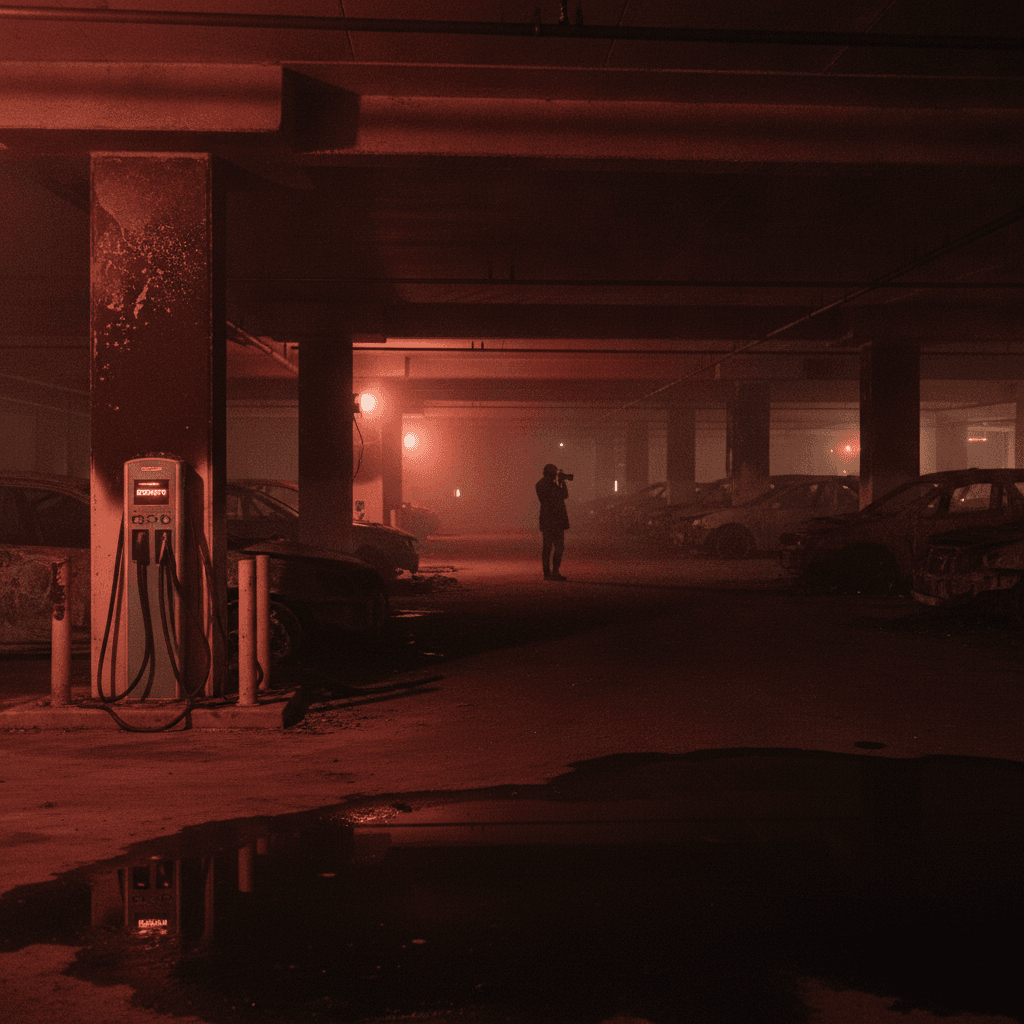
A 32.2 billion won lawsuit begins
In August 2024, a Mercedes-Benz electric car caught fire in the underground parking garage of an apartment complex in Incheon, west of Seoul. Hundreds of vehicles burned, the building's power and water systems were knocked out, and residents were displaced for an extended period. It remains the costliest EV fire in Korean history. Now the incident has moved into the courtroom: Meritz Fire & Marine Insurance, which paid out heavily to victims, has filed a subrogation claim against Mercedes-Benz seeking 32.2 billion won — roughly $23 million.
The legal mechanism is straightforward. An insurer compensates policyholders first, then sues whoever it believes is actually at fault to recover that money. Meritz's position is that a defect in the vehicle — its battery system being the obvious focus — caused the blaze. If the automaker argues instead that external factors or facility management were responsible, the case could become a drawn-out fight over forensic cause.
Why this matters
This is more than a money dispute between two corporations. It has a strong chance of becoming Korea's first major EV fire precedent, establishing how liability is allocated when a single vehicle fire causes mass third-party damage. Until now, EV fire disputes in Korea were typically small-scale — one owner against a dealer, or residents against a building management office. A case with damages in the tens of billions of won, brought by a major insurer as plaintiff, is new territory.
Context matters here for readers outside Korea. Most Korean city dwellers live in high-rise apartment complexes with large underground parking garages, and that is where EV chargers are typically installed. The Incheon fire triggered a national wave of anxiety — sometimes called "EV phobia" in local media — followed by real regulatory change: rules on underground charging facilities, recommended charge-level caps, and a push for automakers to disclose which battery cells are in each model. Korean carmakers began publishing battery supplier lists voluntarily. In other words, this fire already reshaped policy and industry practice; the legal accounting is the last piece.
The evidentiary wall
Korea's Product Liability Act eases the burden on claimants: if a product was used normally and the damage arose from within the manufacturer's sphere of control, a defect can be presumed. But fires are the hardest category to litigate, because the evidence burns with the car. Determining whether ignition began in a battery cell, the battery management system, the charger, or something external is difficult even for the National Forensic Service.
Korean consumers historically struggled in sudden-unintended-acceleration lawsuits for exactly this reason. What is different now is the plaintiff. An insurer has the financial stamina for years of expert testimony and better access to loss-investigation data than any individual owner — which is why the outcome could break from past patterns.
How it compares internationally
Manufacturers have absorbed enormous EV battery costs before. General Motors' Bolt EV recall ran to roughly $2 billion, with battery supplier LG agreeing to shoulder a large share. Hyundai's Kona Electric recall in Korea was similarly split between the automaker and its cell supplier. The common thread: settled, not litigated.
The Incheon case breaks that mold in two ways. The injured parties are third parties — neighbors and other car owners — rather than the vehicle's owner, and the entity pursuing recovery is an insurer with no relationship to the manufacturer. Depending on what investigators conclude about ignition, liability could also extend to the battery cell supplier rather than stopping at the automaker.
What actually changes
For insurers, the ruling will shape pricing. If courts confirm that carriers can recover from manufacturers after EV fires, risk exposure narrows. If not, expect upward pressure on EV-related premiums and on fire coverage terms for apartment buildings with underground charging.
For residential buildings, the fight over whether to allow chargers in basements has not ended. A clearer liability standard would also clarify how far building managers must go on preventive measures — sprinkler upgrades, fire blankets, dedicated charging bays — before responsibility shifts elsewhere.
For car buyers, the most durable change is information. Battery cell maker, chemistry, and BMS specification have entered the Korean purchase decision in a way they had not before 2024, and that shift looks likely to persist regardless of how this verdict lands.
One caution is essential. The suit has only just been filed, and no court has ruled on the cause of the fire. It would be premature to draw conclusions about the safety of any specific model or brand at this stage, and statistics on whether EVs burn more often than combustion cars remain contested across markets. The lasting significance of this case is unlikely to be a verdict on one vehicle — it will be the liability framework that emerges for large-scale fires in a country where most cars park underground.
Sources
Sources
- 국내 최대 '전기차 화재' 벤츠 소송 시작…"322억 지급하라" — nocutnews.co.kr