Nvidia's 138x Decade and the AI Re-Rating of Chips
Start with the numbers
A widely shared calculation in Korean media this week: 100 million won invested in Nvidia stock ten years ago would be worth roughly 13.8 billion won today — a 138x return. Notably, that beats Bitcoin over the same stretch, which is usually the default answer when people ask what the best-performing asset of the decade was. Alongside it, Korean chipmakers were tallied at gains of up to 47x over ten years.
These figures circulate mostly as regret content. The more useful question is why chip companies got re-rated at all. This wasn't luck; it was a structural change in what semiconductors are used for.
Why semiconductors specifically
In 2015 Nvidia was a gaming graphics company. GPUs drew pixels, and the stock was priced accordingly. The inflection came when deep learning turned out to map neatly onto the GPU's parallel architecture. Once a lab curiosity became core data center equipment, unit price and total market grew at once for the same company selling broadly the same kind of chip.
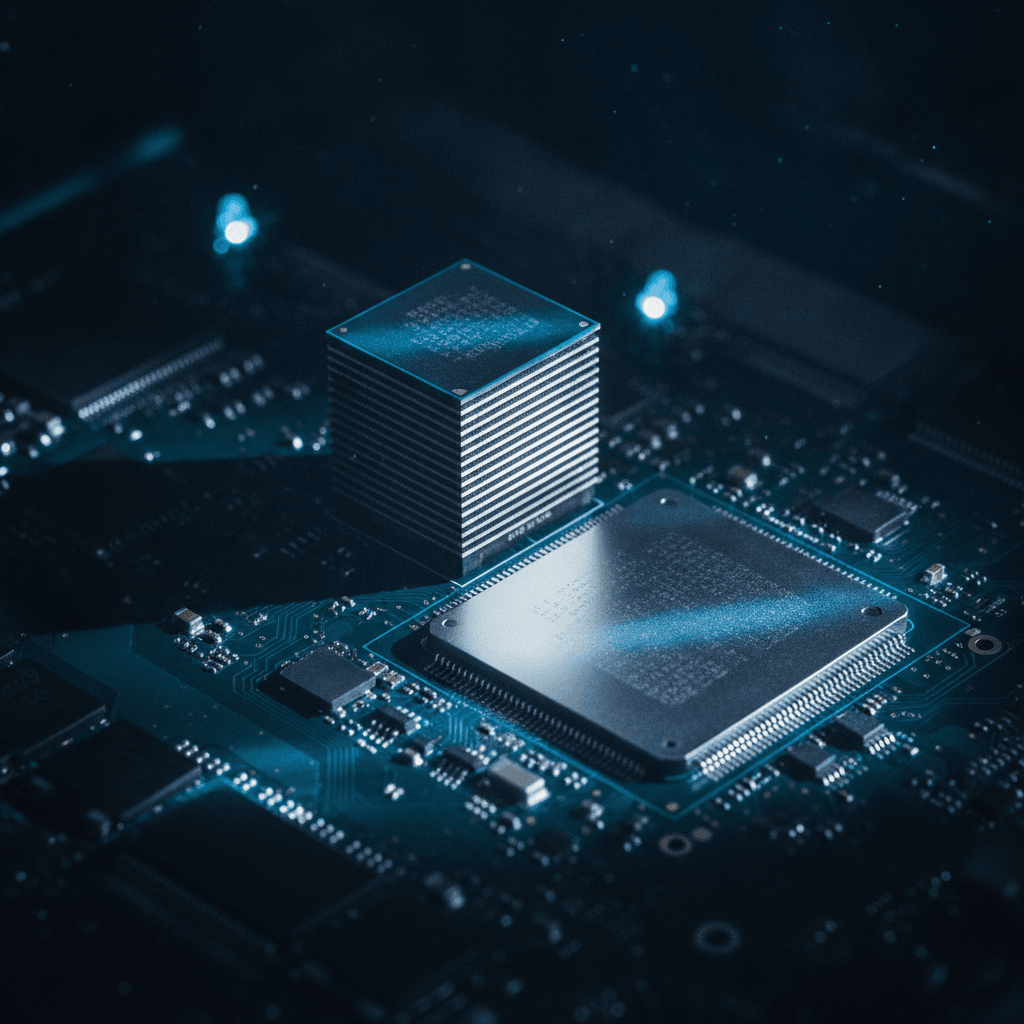
Korea's 47x follows the same logic. For context: Samsung Electronics and SK hynix dominate global DRAM, an industry historically defined by brutal boom-bust cycles — oversupply, price collapse, repeat. High-bandwidth memory (HBM), the stacked memory that AI accelerators require, works differently. Volumes are committed in advance and parts are built to a customer's design. Pricing power shifted toward the memory makers, which is the decisive break from previous cycles.
How this differs from the Bitcoin comparison
Identical decade returns can have very different foundations. Bitcoin's price is driven by demand and narrative, with no quarterly earnings to check it against. A large share of Nvidia's move, by contrast, was backed by actual revenue and profit growth. The fact of a price increase is the same; the ability to verify what caused it is not.
That doesn't make chip stocks safer. Prices justified by earnings fall just as fast when earnings turn. Semiconductors still ride capital-expenditure cycles, and if AI data center buildouts decelerate, valuations could compress on the same logic that lifted them.
What to actually watch now
Past returns guarantee nothing, but the conditions that produced them are worth noting. Three showed up in both cases: an existing component found a new use that expanded the addressable market; there was no easy substitute for that use, creating negotiating leverage; and the demand arrived as multi-year capex rather than a few strong quarters.
For people working in the industry, the practical shift is that engineering difficulty now equals margin. Stacking technology, advanced packaging, and yield used to be cost-line items. Today they decide which supplier a customer qualifies. Going forward, metrics like HBM generation transitions and customer qualification status will likely explain stock moves better than raw shipment volume.
Sources
- "10년 전 1억 넣었음 평생 놀 돈이"...수익률 1위 "역시" — v.daum.net
- 10년 전 1억원, 엔비디아에 넣었다면 138억원…비트코인도 제쳤다 — kyeonggi.com
- 10년 새 47배 뛴 K반도체…주가 폭등 뒤 숨겨진 기술이 바꾼 몸값 — marketin.edaily.co.kr