SK Innovation Reabsorbs SKIET: The Separator Reckoning
What happened
SK Innovation, the energy and battery arm of Korea's SK Group, is moving to absorb SKIET, its listed battery separator subsidiary, back into the parent company. SKIET — SK IE Technology — was carved out of SK Innovation in 2019 and floated on the Korean stock exchange in 2021. Roughly five years later, it is being folded back in. Management frames the move as an effort to unify the battery value chain, speed up decision-making, and improve cost competitiveness.
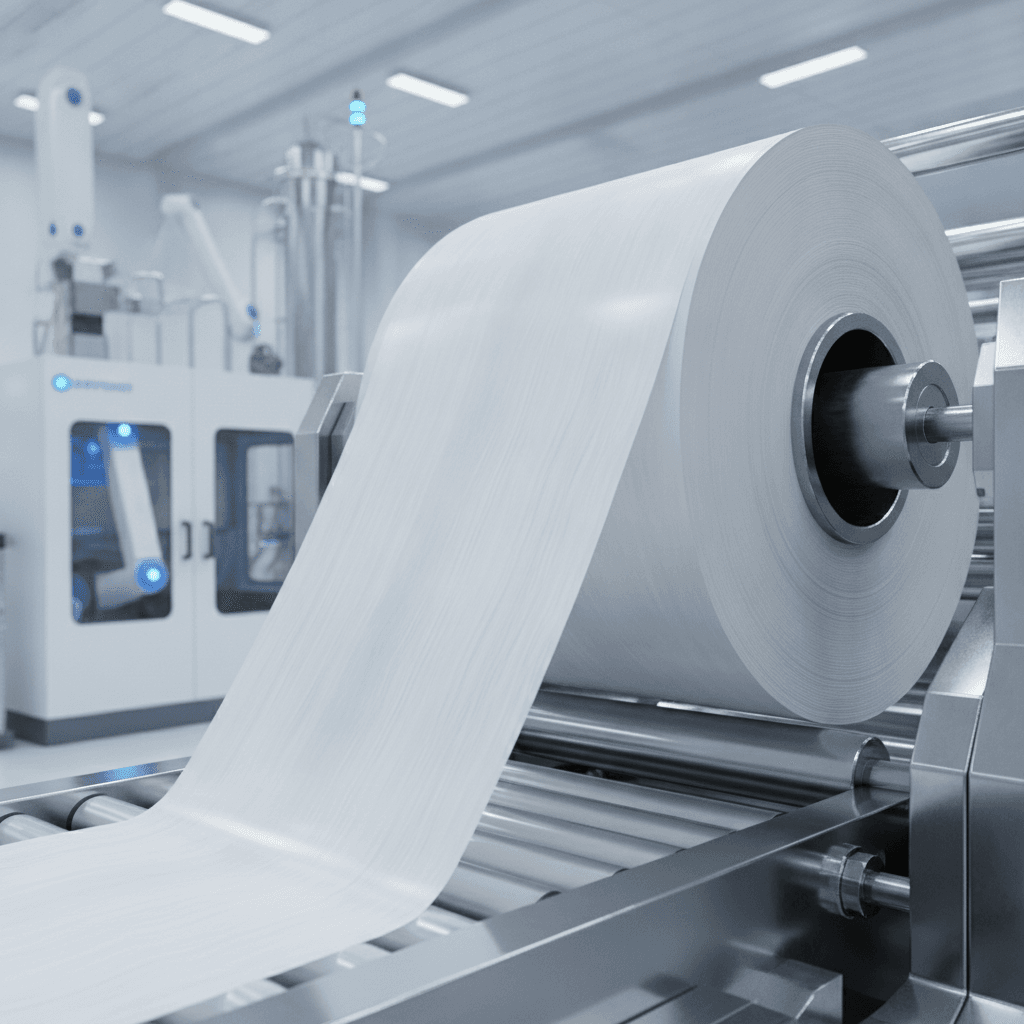
For readers unfamiliar with the component: a separator is the ultra-thin porous film inside a lithium-ion cell that keeps the cathode and anode from touching. Thinner films allow higher energy density, but any defect can cause an internal short and a fire. Among the four core battery materials — cathode, anode, electrolyte, and separator — it is the one most directly tied to safety. SKIET's wet-process separator technology was well regarded globally, and its 2021 IPO drew record-setting retail subscription demand in Korea.
Why now: the EV chasm reshaped the math
The trouble is that demand never caught up with the capacity that was built. Since late 2023, slowing electric vehicle adoption — widely referred to in Korea as the "chasm" — has left battery materials makers with low utilization rates and relentless price pressure from customers. At the same time, Chinese separator producers added enormous capacity, pushing the market into oversupply. SKIET, carrying the cost of expansions in China and Poland, has been running in the red.
This is not an isolated corporate decision. SK Group has been consolidating affiliates since the 2024 merger of SK Innovation and SK E&S, and the SKIET deal sits squarely in that sequence. Pulling a listed subsidiary back in lets the group manage debt and earnings centrally rather than defending a standalone equity story every quarter. With SK On, the group's battery cell maker, only recently approaching breakeven, tightening capital allocation across the chain is a plausible motive.
Why minority shareholders are furious
The anger is about sequencing. When the separator business was profitable and promising, it was split off and listed separately, diluting the parent's shareholders. Now that the same business is losing money, it is being brought back onto the parent's books. This is the tail end of what Korean retail investors have long criticized as "split-off listings" — a governance pattern where a conglomerate spins out its most attractive division, sells shares in it, and leaves original shareholders holding a hollowed-out parent.
SKIET's own shareholders have a mirror-image complaint. Anyone who bought near the IPO price or in the early post-listing surge may find that the exchange ratio values their stake far below cost. SK Innovation holders, meanwhile, inherit a loss-making operation directly into consolidated earnings. Both sides have a case, which is why the exchange ratio and appraisal rights price will be the flashpoints of this deal.
Comparison: how LG and Samsung structured things differently
The contrast with rivals is instructive. LG Chem has largely kept its cathode materials business in-house or tightly coupled with LG Energy Solution rather than floating it as a separate large-cap. Samsung SDI never pursued large-scale separate listings of its materials units at all. In separators specifically, Japan's Asahi Kasei and Toray and China's Semcorp compete on scale, and scale is exactly what a mid-sized standalone listed player struggles to fund during a downturn. Standalone listing as a strategy looks considerably weaker in 2026 than it did in 2021.
The broader lesson repeats across cycles: an independently listed materials subsidiary is a fundraising channel in a boom and a straitjacket in a bust. Loss-making listed companies cannot easily raise capital for capacity expansion. Inside a parent, the same investment can ride the group's credit profile and be timed against the cell maker's own product roadmap.
What actually changes
Three practical shifts are worth watching. First, shorter development cycles between cell and separator teams. What used to be an arm's-length commercial negotiation between two listed entities becomes internal coordination, which can accelerate spec freezes and line conversions.
Second, capacity rationalization. Overseas lines running below breakeven become easier to repurpose, idle, or reconfigure once there is no separate board and no separate shareholder base to answer to.
Third, from an investor's standpoint, SK Innovation becomes an even more complicated single ticker: refining, chemicals, cells, and now separators. That raises the risk of a conglomerate discount, where the market values the whole below the sum of its parts because individual businesses can no longer be priced independently. The flip side is leverage — if battery demand recovers, the consolidated entity captures the upswing across the chain at once.
The bottom line
This merger is less a reorganization than a signal about how the EV slowdown is rewriting Korea's battery materials industry. Superior process technology alone has not been enough to withstand Chinese oversupply; scale and access to capital increasingly decide who survives. The real test comes after closing. Unless the combined company can genuinely improve separator cost competitiveness, consolidation will only relocate the losses rather than eliminate them.
Sources
- SK이노베이션, SKIET 합병…배터리 사업 재편 마무리 — dbr.donga.com
- 떼어낼 땐 '알짜' 다시 품을 땐 '적자'…SK이노 주주 뿔났다 — v.daum.net
- 적자 늪 빠진 SKIET, 결국 모회사 품으로...SK이노베이션, 분리막 사업 품는다 — electimes.com