Busan Adds 1,520 More EV Subsidies as Fuel Prices Drive Demand
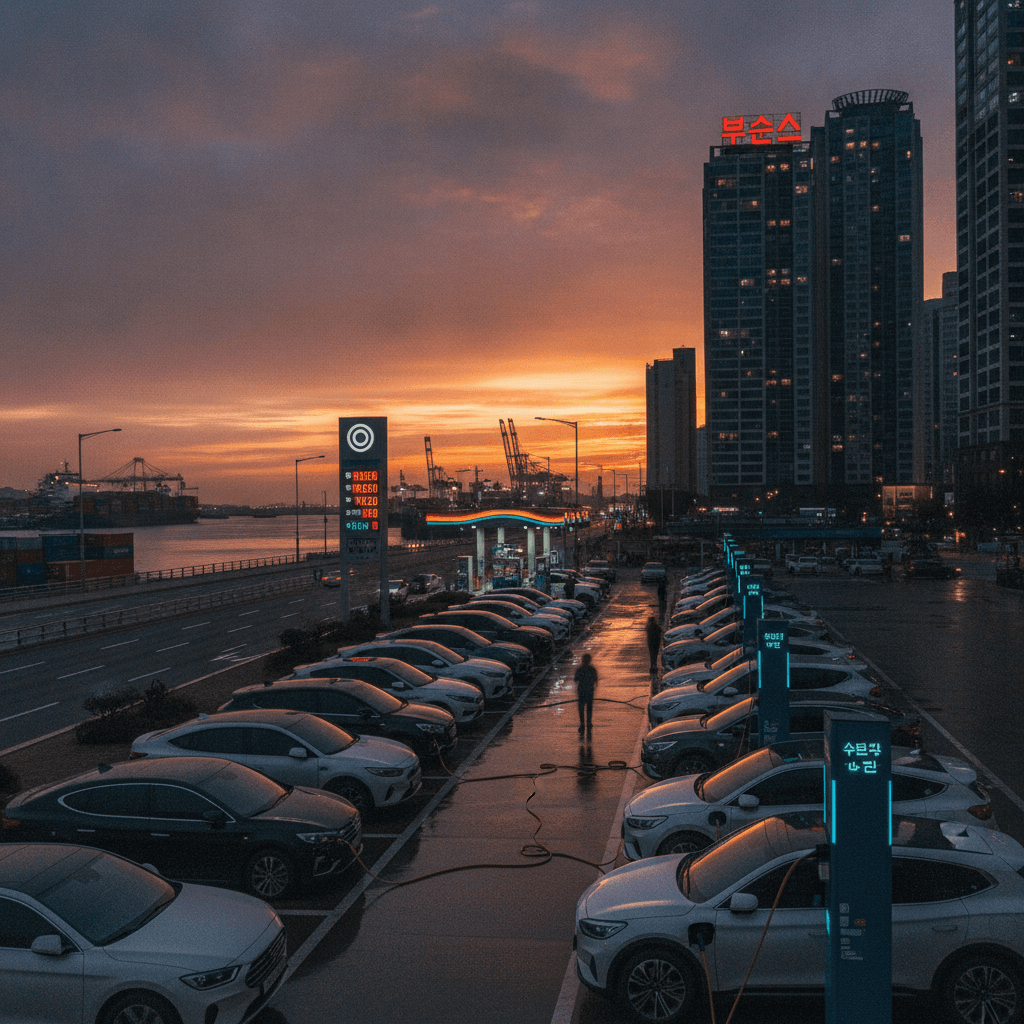
A second top-up in a single year
The city of Busan, South Korea's second-largest city, is reopening applications for electric vehicle purchase subsidies after its allocated quota ran out ahead of schedule. The city is committing 13.5 billion won in total funding — 10.3 billion won from the national government and 3.2 billion won from the city budget — to support an additional 1,520 EVs.
In Korea, EV buyers receive a two-layer subsidy: a central government grant plus a local government top-up, with the local portion varying widely by city and province. Busan had already added a supplementary budget in the first half of the year, so this marks the second mid-year top-up — an unusual cadence that points to a demand forecast that missed the mark.
The city attributes the surge to high fuel prices stemming from conflict in the Middle East. Moon Jeong-ju, head of Busan's climate and environment bureau, framed the extra allocation as an opening for residents who had been weighing a switch to electric, and said the city would work to reduce the friction that comes with a rush of applications.
Why it matters: oil prices, not subsidy rates, moved the needle
For most of the past few years, Korean EV demand has tracked subsidy policy almost mechanically. Grants shrink, sales cool; a new annual quota opens in January, and contracts pile up. The demand slump of 2024–2025 — widely described in Korea as the EV "chasm" — was generally read as a mix of shrinking incentives and lingering anxiety over charging infrastructure.
What makes the Busan case notable is that fuel prices are named as the primary driver, not the subsidy amount itself. If the running-cost gap between gasoline and electricity widens enough, buyers appear willing to pull the trigger even with less generous grants than in earlier years. That is a meaningfully different demand mechanism than the one Korean policymakers have been planning around.
The regional lottery
Because the local share varies, where you live determines how much you get and, just as importantly, whether money is still available. Some municipalities exhaust their quota early in the year and simply do not refill it, leaving buyers to wait for the next budget cycle. Busan topping up twice in one year highlights how subsidy availability differs by region — the same car with the same national grant can be purchasable months apart depending on the buyer's address.
What changes for buyers
For Busan residents who held off, there is effectively one more window this year. These programs typically operate first-come, first-served until the budget is spent, so timing of application is what decides the outcome. The additional volume is split across vehicle categories, so the practical first step is checking whether units remain in the segment you are shopping.
Exact grant amounts, eligibility rules and per-model allocations should be verified against the city's official notice. Local EV subsidy terms in Korea — price ceilings, minimum ownership periods, residency requirements — are adjusted annually, so assumptions carried over from a previous purchase or another region often no longer hold.
The industry read
For automakers and dealers, the open question is how long fuel prices stay elevated. While they do, the total-cost-of-ownership argument for EVs makes itself. If oil retreats, some of the demand pulled forward this year could leave a hole behind. For local governments, the lesson is similar: budgets built without accounting for volatile external variables lead to exactly this pattern of reactive, piecemeal supplementary funding — and forecasting accuracy is quietly becoming a measure of how well an EV adoption policy is run.
Sources
- 고유가에 전기차 수요 급증…부산시, 추가 보급 — yna.co.kr
- 부산시 전기차 구매 보조금 추가 지원…1520대 보급 — nocutnews.co.kr
- 부산 전기차 보조금 또 풀린다… 수요 몰려 1520대 추가 보급 — view.asiae.co.kr
- 부산시, 전기차 1520대 추가 보급한다 — newsis.com