Seoul Targets 500 Self-Driving City Buses by 2030
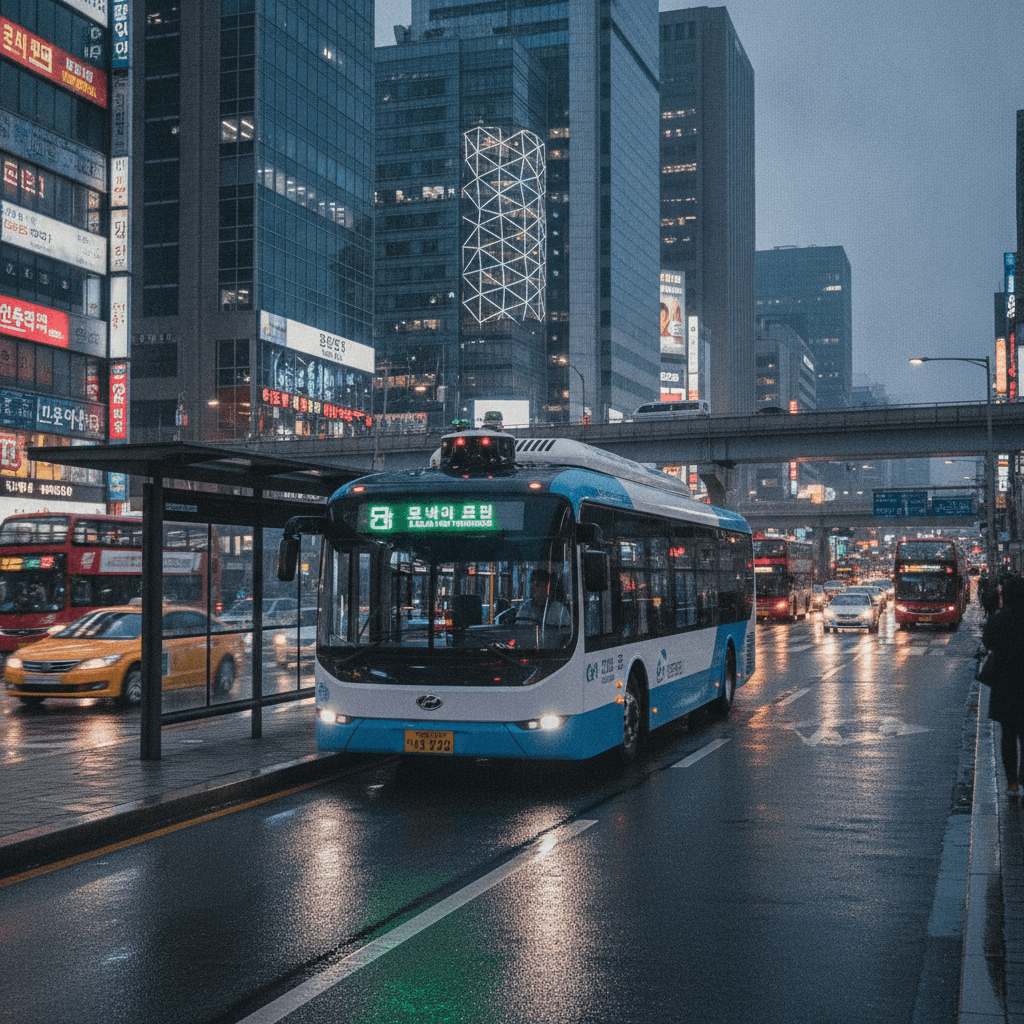
What happened
The Seoul Metropolitan Government says it will push to put 500 autonomous city buses on the road by 2030. The city signed a memorandum of understanding with Hyundai Motor and the Seoul Bus Transport Business Association to jointly handle technology development, real-world pilot operation, and the performance certification process needed to commercialize self-driving buses.
The division of labor is fairly clear: the automaker supplies the vehicles and the autonomous driving stack, the bus operators' association handles route operation plus depot and maintenance infrastructure, and the city handles route selection and the regulatory and certification framework. Buses are often considered an easier target than robotaxis because they repeat fixed routes and perform highly standardized maneuvers — pulling into stops, loading and unloading passengers — rather than navigating arbitrary destinations.
Why now
The announcement lands at a moment when repeated bus strikes in Seoul have raised fresh concerns about citywide transit disruption. The city did not frame autonomy as a strike countermeasure, but the episode once again exposed how completely route bus service depends on labor negotiations with a single workforce group.
The deeper driver is staffing. Bus driving in Korea is an aging occupation with weak inflow of new workers, and late-night and pre-dawn shifts are the hardest to cover. That context helps explain why Seoul has been expanding autonomous bus routes step by step since launching its late-night self-driving bus service in late 2022. The 500-vehicle plan reads less like a new experiment and more like a declaration of scaling from pilot to fleet.
How this differs from the existing pilots
Korean autonomous bus services so far have mostly been "a few vehicles on one route" demonstrations, with a safety operator seated behind the wheel ready to take over. A 500-vehicle target implies something different: an actual fleet, which requires industrial-scale readiness in manufacturing, maintenance, remote monitoring, insurance, and certification.
The inclusion of performance certification in the agreement is worth noting. Autonomous vehicles in Korea have largely operated under temporary operating permits for testing purposes. Deploying them as regular commercial route buses requires an established, repeatable certification standard — which means regulation may be the real bottleneck, not the software.
What changes for riders
Not much in the near term. The 2030 target is still roughly five years out, and 500 buses is a modest slice of Seoul's total city bus fleet. Realistically, the first candidates will be late-night and early-morning services and low-demand routes with long headways. The practical benefit riders may notice first is defensive rather than dramatic: night service that would otherwise be cut for lack of drivers staying in place, or less pressure to suspend money-losing routes.
Whether the plan hits its target is another question. Rolling out autonomous buses involves not just technical maturity but unresolved questions about driver employment, liability in the event of a crash, vehicle unit costs, and budget. Bringing the bus operators' association in as a signing party suggests the city wants to manage the labor side early — though such coordination typically gets harder, not easier, as deployment scales.
What to watch
The meaningful milestones are sequencing, not headline numbers. First, when and where fully driverless operation without an onboard safety operator is permitted. Second, when concrete performance certification criteria are published. Third, how many vehicles are actually added year by year. A slip in any one of these would likely force the 500-bus target to be revised.
Sources
- 서울시, 2030년까지 자율주행 시내버스 500대 도입 — hg-times.com
- [서울] 2030년까지 자율주행 시내버스 500대 도입 추진 — ytn.co.kr