Ferrari's First EV Lands in Korea — And It's Cheaper Than Europe
An Electric Ferrari, 79 Years In
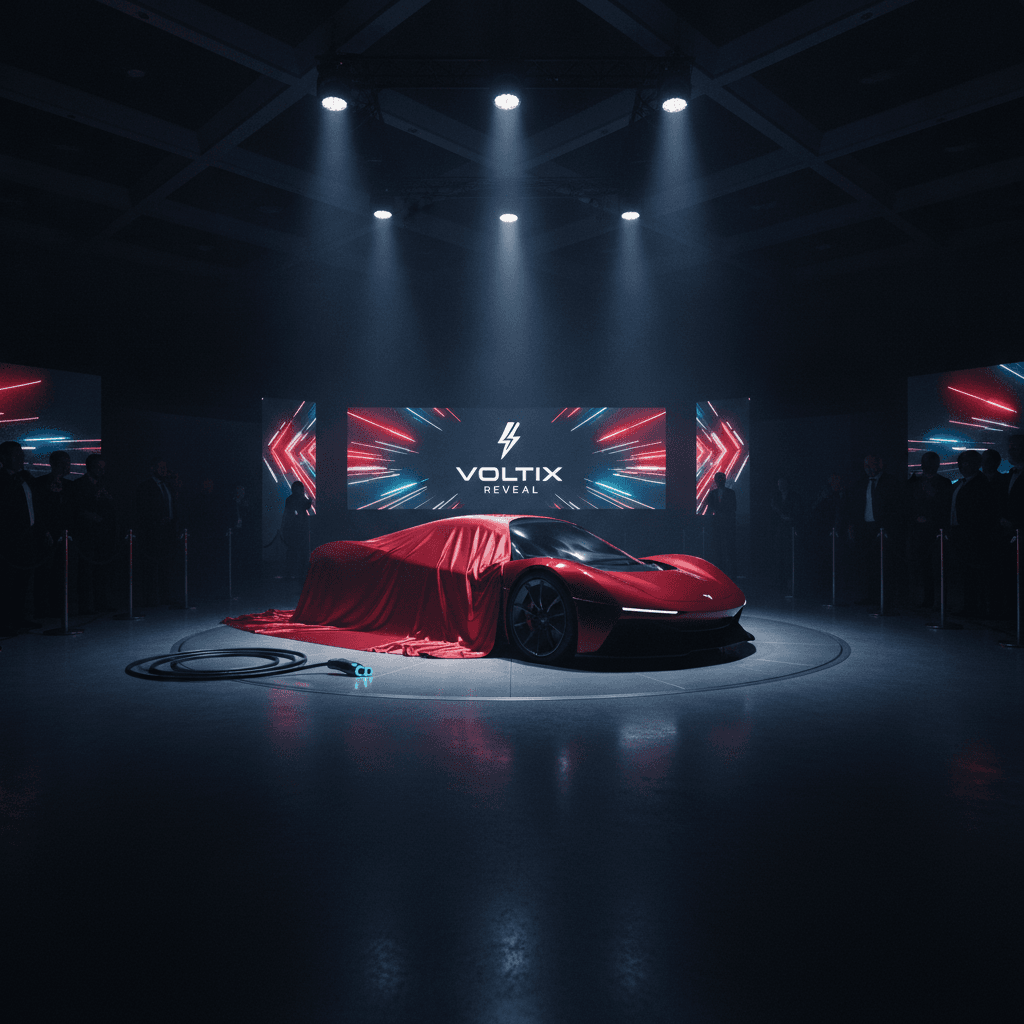
Ferrari has shown its first-ever battery-electric production car, called Luce, to the Korean market. Reports from the Seoul unveiling describe applause as the cover came off — though the broader reaction to this car since its reveal has been anything but unanimous. For a brand whose identity has been inseparable from the sound of a combustion engine, deleting that engine is not a small gesture.
The event featured a video message from Ferrari CEO Benedetto Vigna and a walkthrough of the car's dedicated EV architecture, exterior design and cabin interface. Thibault Dussarat, head of Ferrari Korea, called Korea "a core market that combines an appreciation for heritage with a sharp eye for advanced technology." That's diplomatic language, but it lands on a real fact: Korea has become one of Asia's largest supercar markets, and getting an early showing of a halo model here would have been unthinkable a decade ago.
The Numbers
The headline figures are 1,050 hp and 0–100 km/h in 2.5 seconds. That puts Luce at the sharp end of Ferrari's own lineup, and given the instant torque delivery of an electric drivetrain, the subjective acceleration may feel even more violent than the number suggests.
But in this segment, a straight-line sprint is the easy part. What separates a serious performance EV from a fast one is thermal management — the ability to hold peak output over repeated laps without the battery derating. No amount of spec-sheet reading answers that; it takes independent track testing, which hasn't happened yet.
More telling is Ferrari's insistence that Luce is not an existing model with the engine swapped out. Building a dedicated EV architecture means the battery placement, center of gravity and body proportions were designed from scratch. In a sports car, center-of-gravity height is a direct performance variable, so this approach implies Ferrari absorbed significant development cost rather than taking the cheaper conversion route.
Why This Matters Now
Over the past couple of years, the electrification timelines of luxury performance brands have quietly slipped. Porsche has extended the life of its combustion models, and Lamborghini has pushed back its first fully electric car. The reasons are consistent: demand for high-performance EVs has grown more slowly than forecast, and buyers at this price point place real value on engine sound and gearshift feel — things an EV cannot replicate honestly.
Against that backdrop, Ferrari actually delivering a production BEV counts as one of the earlier bets in the segment. Importantly, though, the company has maintained that it will not apply a single powertrain type across every model. Luce is best read not as a declaration that Ferrari is going electric, but as the third leg of a stool alongside combustion and hybrid models.
The competitive picture is worth noting for readers outside the supercar bubble. Electric hypercars already exist — Rimac and the Lotus Evija among them — and several of them out-muscle Luce on paper. Ferrari has never sold on raw output alone; it sells a narrative of feel and brand. Which is why Ferrari Korea's messaging leaned hard on the claim that the car preserves "Ferrari's distinctive driving thrill even in electric form." Luce will be judged less on whether it's fast and more on whether it feels like a Ferrari.
What Actually Changes — Pricing and the Buyer's View
The detail that drew the most attention in Korean coverage wasn't performance. It was price: local reporting highlighted that Luce is roughly 100 million won cheaper than in Europe (about US$70,000). That's unusual. Imported supercars in Korea have historically carried a premium over home-market pricing because of taxes and distribution layers.
It would be premature to read this as Korea getting a favor. Most European markets charge VAT above 20%, and countries like France apply escalating emissions-based penalty taxes that can add enormous sums to high-output cars. An EV, by contrast, produces no tailpipe emissions and may benefit from Korea's electrification-related tax structure, including excise tax relief. In other words, the gap likely stems more from tax structure than marketing strategy. Final domestic pricing and option-dependent figures should be confirmed against official announcements rather than early reports.
Two things genuinely change for buyers. First, the roughly 800-million-won (≈$560,000) supercar segment now includes a Ferrari you plug in. Since most customers at this level own multiple cars, Luce is more likely to be added to a collection than to replace an existing V8 or V6 hybrid Ferrari. Second, "first of its kind" carries residual-value implications. Ferrari's historic firsts have often held value well — but battery degradation is a variable the used supercar market has never had to price before, and there is no track record to lean on.
The Bottom Line
Luce is less a spec-sheet story than an experiment in brand identity. Ferrari is asking whether it can surrender its single most recognizable asset — the noise — and still be Ferrari. That answer won't come from a static unveiling in Seoul. It'll come from the first wave of independent drives and from how early owners talk about the car once deliveries begin.
Sources
- [현장] 8억원대 페라리 첫 전기차 '루체' 韓 상륙…직접 만나보니 — newsis.com
- 호불호 갈렸던 페라리 첫 전기차 '루체' 韓상륙 — zdnet.co.kr
- '1050마력·제로백 2.5초' 페라리, 첫 순수 전기차 '루체' 韓 최초 공개 — etnews.com
- 유럽보다 1억가량 싸다…페라리 첫 전기차 '루체' 한국 상륙 — news1.kr
- 79년 역사 새로 쓴 페라리…첫 전기차 ‘루체’ 韓 공개 — ddaily.co.kr