The Facelifted Mercedes S-Class: What 5 Years Bought
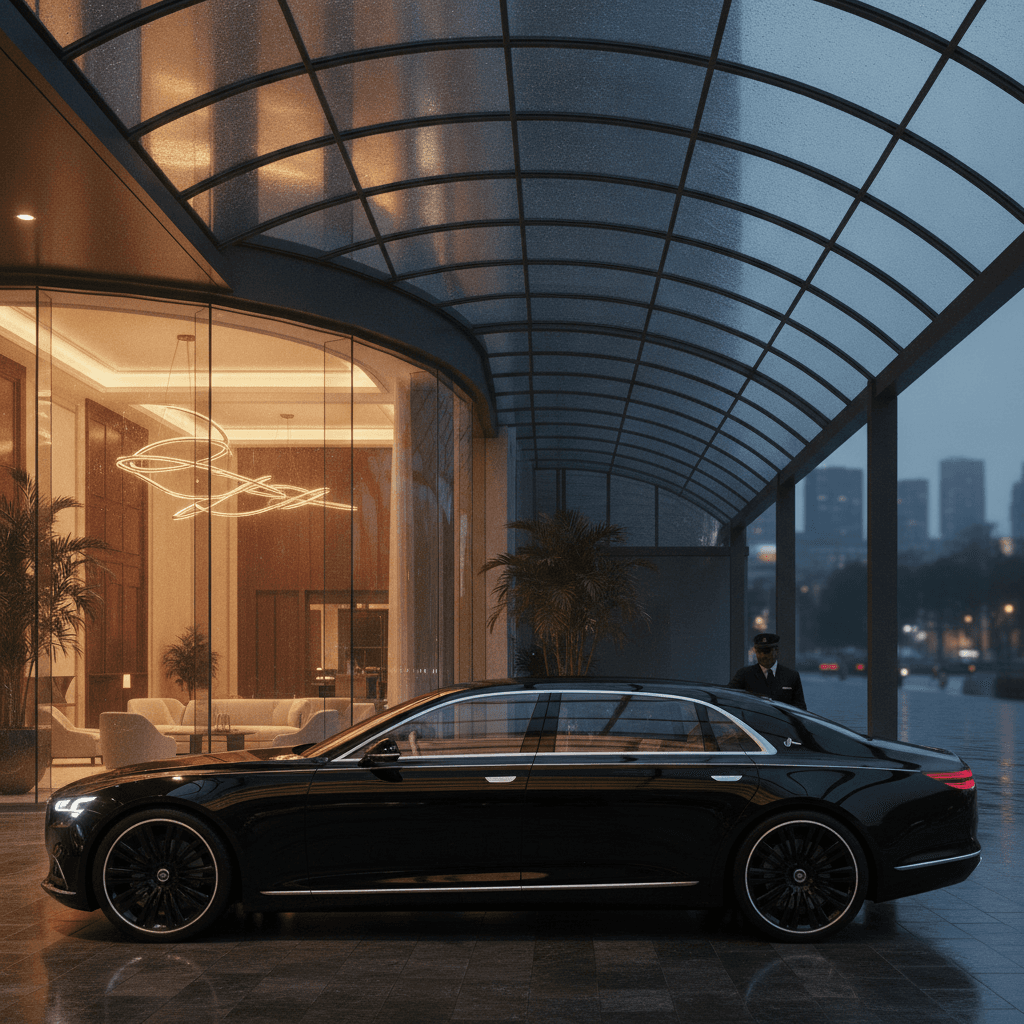
A flagship refreshed after five years
Mercedes-Benz has rolled out the facelifted version of its flagship sedan, marketed in Korea as "The New S-Class." The current seventh-generation car (chassis code W223) debuted in 2020, which makes this roughly a five-year gap before a substantial update. Around the same time, Han Sung Motor — one of Mercedes-Benz Korea's largest official dealer groups — handed over the first units of the updated Mercedes-Maybach S 580 to customers, signalling that the refreshed range is arriving from the standard cars up through the ultra-luxury Maybach trim.
Korean road tests published this week converge on two observations. First, the qualities the S-Class has always been sold on — silence and ride comfort — remain the core of the car's identity. Second, the digital side has been noticeably upgraded. In other words, this is less a mechanical overhaul than a mid-cycle push centred on infotainment and software experience.
Why the update took this long
Flagship sedans typically get a mid-cycle refresh three to four years in. The W223 waiting closer to five likely reflects a combination of pressures: the semiconductor shortage that scrambled product plans across the industry after 2020, shifting engineering priorities, and the enormous internal effort Mercedes poured into electrification. The company launched the EQS as a separate electric flagship during that window, but demand never matched the ambition. The practical result is that the combustion and hybrid S-Class remains both the brand's symbol and a major profit centre — which raises the stakes for this refresh.
Why it matters
The S-Class is not merely an expensive car that sells well. It has historically served as Mercedes' technology showcase: driver assistance systems, suspension control, cabin materials and safety features debut here and filter down to the E-Class and C-Class years later. So when a facelift emphasises the digital cabin experience, that is a reasonable signal of where the interior UX of the brand's higher-volume models is heading.
Korea deserves specific mention here. It has consistently ranked among the largest S-Class markets in the world, and the share of buyers opting for the Maybach variant is unusually high by global standards. That reflects a mix of corporate fleet demand, chauffeur-driven executive use, and a domestic status-consumption culture in which the most expensive sedan on offer carries real social signalling weight. For Mercedes, Korea functions as something close to a key test market for flagship reception.
The competitive picture
The traditional rivals are the BMW 7 Series and the Audi A8. The current 7 Series went aggressive — polarising front-end design, an enormous rear-seat theatre screen — while the A8 has taken a quieter path. More recently, Genesis, Hyundai's luxury division, has pushed the G90 hard in the domestic large-sedan segment, competing largely on equipment-for-price and squeezing imported flagships from below.
Against that, the S-Class leans on proven execution. The comfort and quietness that reviewers keep returning to are hard to quantify but are exactly what generates repeat purchases at this price point. The vulnerability is the newer front of software competition, where challengers iterate quickly; whether this refresh creates a real gap or merely closes one is the open question.
What actually changes for buyers
For anyone considering the car, three practical points stand out. The first is timing. Immediately after a facelift, remaining pre-facelift inventory usually comes with more negotiating room. But residual value and the newer infotainment hardware complicate a straight price comparison, so the cheaper sticker is not automatically the better deal.
Second, a more digital cabin makes software update policy a genuine ownership variable. How broad is over-the-air update coverage? How long are connected services included before they require payment? Are any features subscription-gated? For a car many owners keep five years or longer, these questions matter more than they used to, and the answers should be confirmed directly with the official retailer before signing.
Third, top trims like the Maybach S 580 arrive in limited volume. The fact that first deliveries have only just begun means ordinary shoppers may wait some time before they can even see and evaluate a car in person, let alone take delivery.
The takeaway
This is a mid-cycle check-in rather than a generational leap. Its strategic significance lies elsewhere: at a moment when the industry's electric transition has proven slower and messier than forecast, the refresh extends the life of a combustion flagship that still anchors the brand. Mercedes has not publicly committed to the powertrain mix of the next-generation S-Class, so any claim about what comes after would be speculation. What seems reasonably clear is that the current car will remain the face of the three-pointed star for a while yet.
Sources
- [타보니] “5년 만에 업그레이드”…벤츠 S-클래스로 보는 ‘명품의 조건’ — khan.co.kr
- 한성자동차, 더 뉴 메르세데스-마이바흐 S 580 첫 고객에 전달 — v.daum.net
- [시승기] 진화한 ‘더 뉴 S-클래스’, 특유의 안락함에 디지털 경험 강화 — asiatoday.co.kr