What is FC-BGA? Reading LG Innotek's substrate and earnings claims
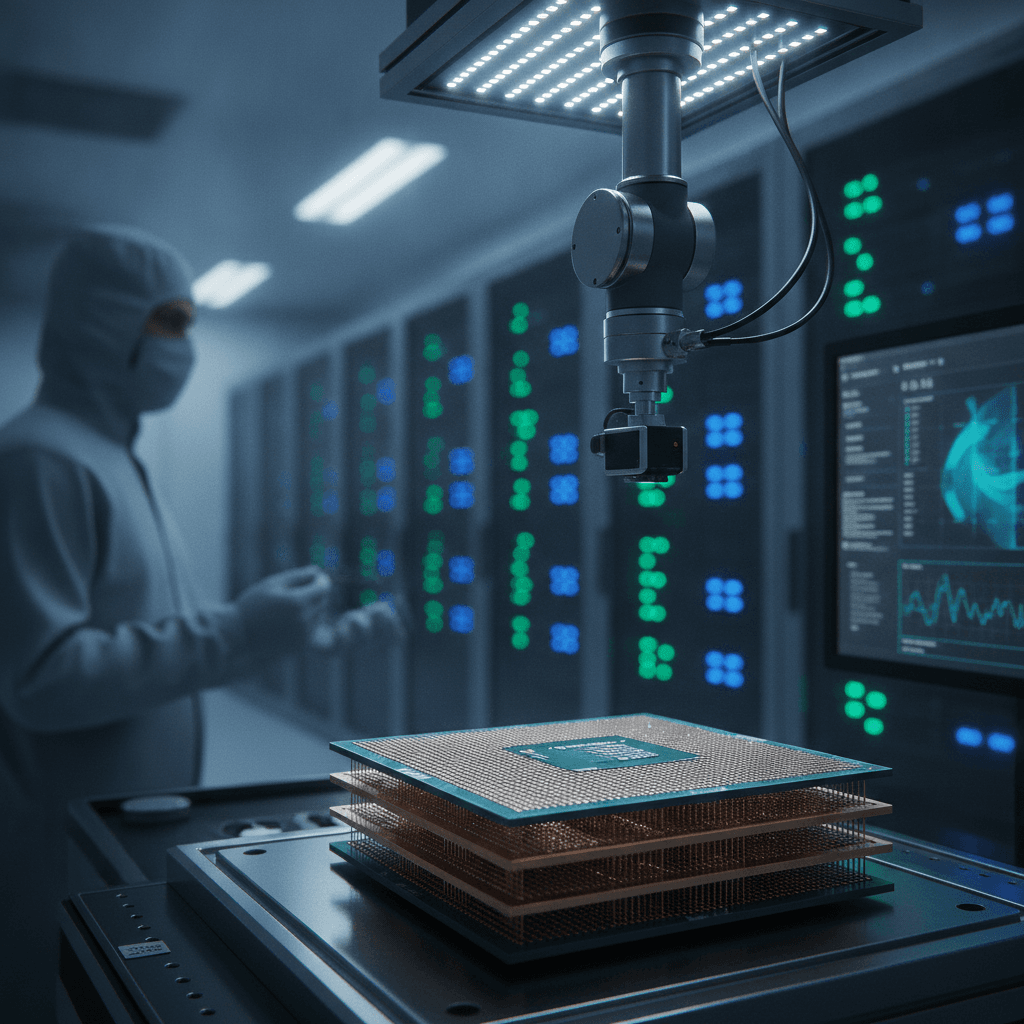
FC-BGA connects a chip to its surrounding system; it is not the chip that performs AI calculations. That distinction also matters when reading LG Innotek's earnings. Company-wide profit growth does not establish the profit contribution of one substrate product.
What FC-BGA means
Flip Chip Ball Grid Array is a packaging approach supporting many chip-to-substrate connections. LG Innotek lists applications including PCs, servers and high-performance computing. Its discussion of glass cores concerns the substrate material, not a replacement definition of FC-BGA. LG Innotek technical explanation
Producing this substrate type and supplying a named AI accelerator customer are separate claims. Leave the customer field unknown unless a source identifies it.
What the earnings release establishes
LG Innotek's July 27, 2026 preliminary consolidated release reports second-quarter revenue of KRW 5.5272 trillion and operating profit of KRW 245.8 billion, versus KRW 11.4 billion profit a year earlier. Package Solutions revenue was KRW 498.4 billion. The company discusses camera modules and several substrate types, not FC-BGA alone. Official earnings release
The release does not isolate FC-BGA's operating profit. Our earlier headline did not sufficiently distinguish product performance from company performance.
When a growth percentage looks striking, label its comparison period and reporting scope. Year-on-year and quarter-on-quarter comparisons answer different questions, as do consolidated and segment figures.
Why substrate engineering matters
Samsung Electro-Mechanics' 2023 ADAS substrate announcement discusses fine circuits, larger multilayer structures, warpage and demanding automotive conditions. This is a historical technical example, not evidence of LG Innotek's present manufacturing results. Samsung Electro-Mechanics example
Our takeaway: accommodating more connections and operating reliably in the intended environment must be considered together. More layers or greater area alone do not establish superiority across every application.
Four questions for the next announcement
- Which product? PC, server or automotive? Do not substitute one FC-BGA product for the whole package business.
- Which milestone? Development, customer qualification, mass production and delivery are distinct stages.
- Which financial scope? Company profit, segment revenue or product sales? Do not fill missing product-level figures with assumptions.
- What can be checked again? Look for comparable reporting in subsequent releases rather than declaring a trend from one announcement.
For example, rising profit and a factory expansion plan can both be reported. But future output from that expansion cannot explain profit already recorded. Separating current results from future plans is more useful than attaching an AI label to every number.
For another infrastructure component, read air cooling, liquid cooling and chillers explained.
Revised September 14, 2026: clarified financial scope, added technical context, and removed unsupported robotics monetization and share-price forecasts. Original publication date and URL retained. This is a technical and reporting explainer, not investment advice.
Sources
- LG이노텍 2026년 2분기 연결 잠정 실적, 2026-07-27 — LG Innotek
- LG Innotek: FC-BGA technology and materials, 2026-06-22 — LG Innotek
- 삼성전기 ADAS용 FC-BGA 개발 사례, 2023-02-27 — Samsung Electro-Mechanics
- “전자계열사 호실적에 로봇 모멘텀까지”… 하나증권, LG 목표가 14만원... — biz.chosun.com