Tesla Recalls 3 Million Cars in China Over Door Handles
What happened
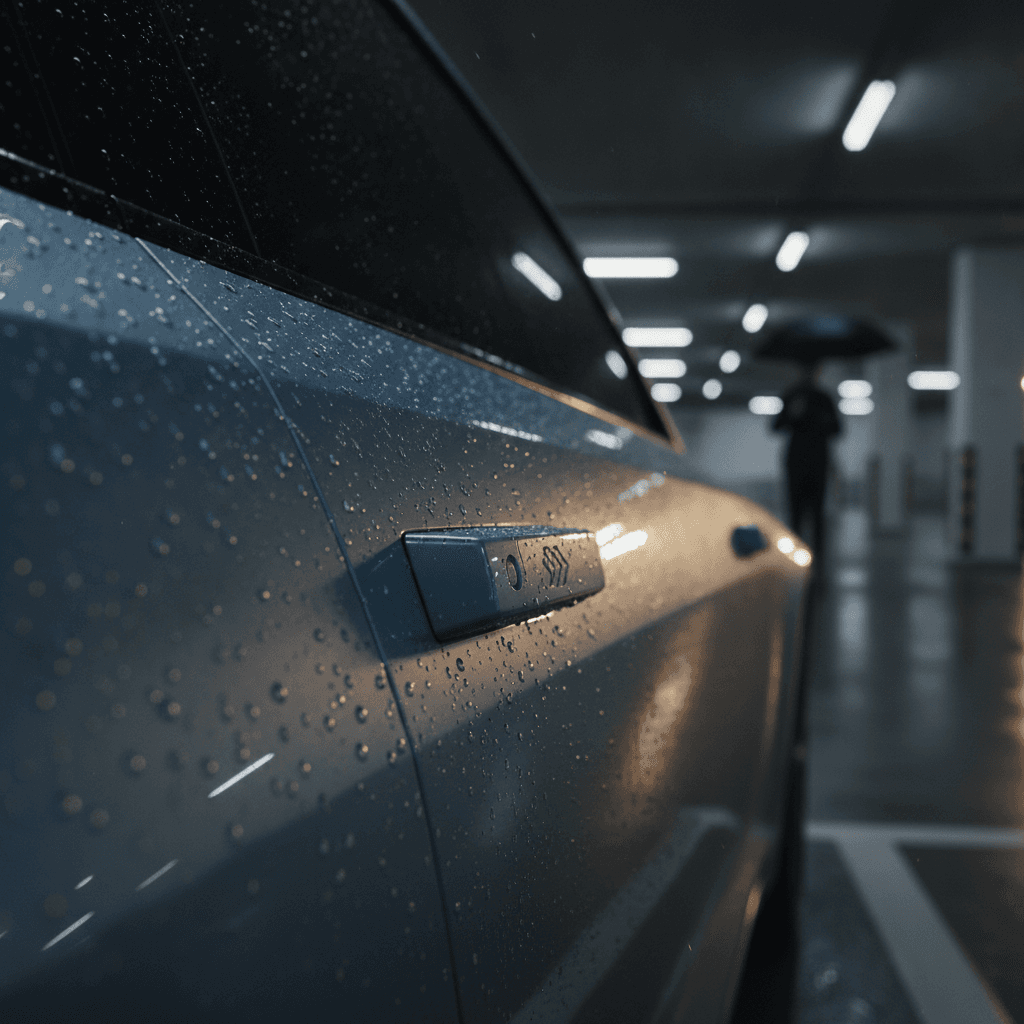
Tesla is recalling roughly 3 million vehicles in China. According to Bloomberg, the country's State Administration for Market Regulation (SAMR) raised safety concerns about flush-mounted electric door handles, and nine brands in total were named — Tesla among them. The core issue: if a crash cuts electrical power, an electronically actuated handle may not deploy or release the latch.
This did not come out of nowhere. Earlier this year, Chinese regulators effectively moved to bar fully flush door handle designs after a string of incidents involving several domestic EV brands, including Xiaomi, whose SU7 sedan has become one of the highest-profile new entrants in China's EV market. The recall reads as the enforcement stage of a rule change already in motion.
Why flush handles became standard — and why that's now a problem
Retractable, body-flush handles have been an EV design signature for over a decade. The logic is straightforward: removing protrusions from the body side lowers the drag coefficient, which translates directly into range. Tesla popularized the approach with the Model S in 2012, and nearly every EV-focused automaker has since adopted some version of it.
The trade-off is that these handles typically depend on electrical signals. If the 12V auxiliary battery or the wiring loom is damaged, the handle may not present itself and the latch may not open. Most vehicles do include a mechanical emergency release inside the cabin, but placement varies wildly — inside a door pocket, under a speaker grille, beneath a trim cover. Expecting an occupant, or a first responder who has never sat in that model, to locate a lever they've never used within seconds of a crash is a stretch.
That framing matters. This is less a story about one company's defective part and more about an industry-wide design convention outrunning safety regulation. The fact that nine brands were cited at once makes that clear.
Will this spread to the US and Europe?
Michael Brooks, executive director of the US nonprofit Center for Auto Safety, noted that when a manufacturer issues a recall in one country, it typically triggers an internal process of planning for other markets. That reflects how global recalls usually work: shared platforms and shared parts mean an issue rarely stays contained to one region.
But it isn't automatic, because the regulatory machinery differs. In the US, the National Highway Traffic Safety Administration (NHTSA) generally opens a defect investigation and pushes toward a recall from there; it rarely pre-emptively outlaws a specific design form the way Chinese regulators did. So while a parallel action is plausible, the timing and scope remain uncertain, and would likely depend on whether a formal investigation is opened and how much incident data accumulates.
What actually changes for owners
First, the remedy itself is the open question. If regulators are objecting to the design rather than a manufacturing fault, a software update alone may not satisfy them — though based on what has been disclosed so far, it is not yet confirmed whether the fix is software, hardware, or both. Owners should watch for the manufacturer's official recall notice rather than rely on secondhand reporting.
Second, EV door design may genuinely shift. Some brands have already moved toward semi-flush handles or designs where part of the grip is permanently exposed. If guaranteed emergency egress starts outranking a fractional aerodynamic gain in the design brief, the next generation of EVs could look different at the door line.
Third, there is something practical you can do today. If your car uses electronic door releases, find the mechanical emergency releases for both front and rear doors in the owner's manual, and show them to family members and frequent passengers. Notably, some models provide no rear-seat mechanical release at all, or hide it under a removable cover — so check your specific vehicle rather than assuming.
The bigger picture
The headline number is striking, but the direction of travel matters more. This may be remembered as the first case where regulation overruled EV design orthodoxy on a global scale. China is both the world's largest EV market and the place where new vehicle design experiments move fastest, which means standards set there tend to ripple outward — a pattern already visible in battery safety rules and in how driver-assistance features must be marketed.
For consumers outside China, the near-term impact is limited. But if flush handles follow the same trajectory as other China-first EV rules, buyers in other markets may find the option quietly disappearing from spec sheets over the next product cycle — not because it stopped working, but because the definition of "works" changed to include the moment after a crash.
Sources
- 中 테슬라 300만대 무더기 리콜…매립형 손잡이 결국 손본다 — kyeonggi.com
- 테슬라 '매끈한 손잡이'가 발목 잡았다…中서 300만대 리콜 — hankyung.com