Hyundai's Two-Track Bet: NVIDIA in 2028, Its Own AI in 2029
What Hyundai announced
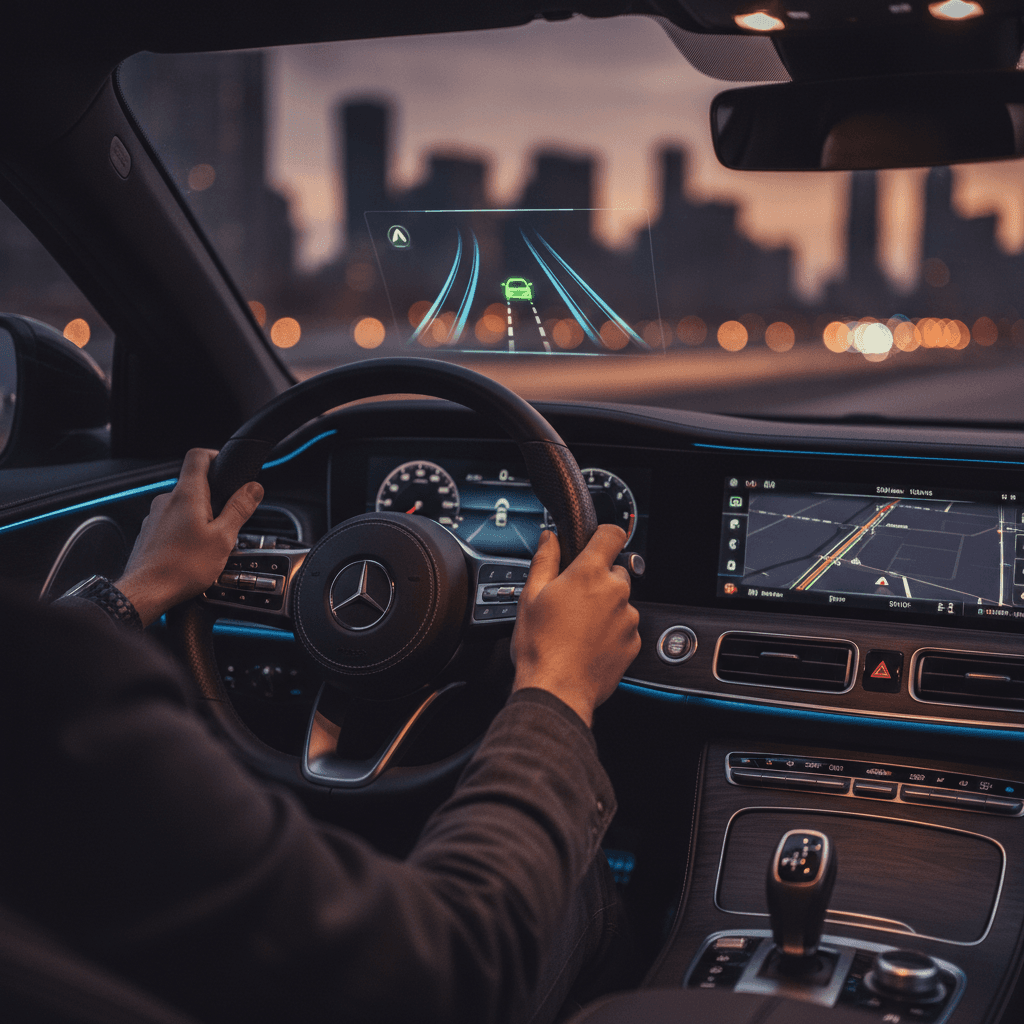
Hyundai Motor Group — the Korean auto group that includes Hyundai, Kia and Genesis — has laid out a self-driving roadmap built on two parallel tracks. Production vehicles running on NVIDIA's autonomous driving platform arrive in 2028, followed in the second half of 2029 by cars powered by the group's own AI system, called Atria AI, at what it describes as "Level 2++." Atria is built as an end-to-end model, meaning perception, decision-making and control run through a single neural network rather than separate hand-engineered modules.
The group also signaled it intends to push the same technology stack toward Level 4 capability. President Park Min-woo framed the shift bluntly: carmakers will no longer be judged on spec sheets but on self-driving software, where data volume and learning speed decide the winner.
Why run two tracks at once
Building your own AI while shipping someone else's looks contradictory until you consider vehicle development cycles. Validating and certifying a production car takes years; autonomous driving software iterates far faster. Leaning on a proven external platform for the 2028 launch keeps the product calendar intact while the in-house stack matures — essentially a hedge against a product gap.
The second track reflects a strategic judgment most legacy automakers have reached: outsourcing the driving software long-term means handing over control of vehicle data, over-the-air features and any future revenue tied to them, leaving the automaker with hardware margins alone. That is why carmakers have spent recent years buying or building software arms. At Hyundai, that role sits with its subsidiary 42dot, which develops Atria.
How it compares with Tesla
Tesla's advantage is a head start on end-to-end neural networks and a closed loop in which its own fleet feeds training data back into the model. Hyundai's counterargument is scale: over 7 million vehicles sold globally per year means that, if the data pipeline is properly built, raw driving data should not be the bottleneck.
But sales volume and usable training data are not the same thing. What matters is how many vehicles carry the right sensor suite, and which jurisdictions permit that data to be uploaded at all. And by 2028–2029, Tesla, Waymo and other leaders will not have stood still. Read realistically, this roadmap is less a plan to overtake the front-runners than a timetable for owning enough of the stack not to be left dependent on someone else's.
What it means for buyers
First, a label caution. "Level 2++" is not a category in the SAE international standard — it is industry marketing shorthand, and functionally the driver stays responsible. Whether hands-off or eyes-off operation is permitted on highways will depend on each market's regulations and the final vehicle specification at launch, neither of which is settled today.
The more practical takeaway concerns purchase timing. If the 2028 and 2029 cars run different compute platforms and different software stacks, how far future feature updates extend may vary even within the same brand. For buyers who care about driver-assistance features, long-term update coverage becomes as important as the feature list at delivery. And with the launch still more than two years out, announced timelines and final production specs can both change.
Sources
- 현대차그룹, 29년 독자 AI 자율주행 내재화 — news.dealsitetv.com
- 현대차그룹, 엔비디아로 자율주행 속도전…'아트리아 AI'로 기술 내재화 — g-enews.com
- 현대차그룹 박민우 사장 “자동차 경쟁력은 자율주행 SW…개발 속도 높... — fntimes.com
- 현대차그룹, 자율주행 바퀴 돌린다…테슬라 따라잡을 수 있을까 — khan.co.kr
- 현대차그룹 자율주행 10문10답…2028년은 엔비디아, 2029년은 아트리아로... — asiatime.co.kr