Lexus ES Goes Electric at ₩71.6M, Undercutting Genesis G80
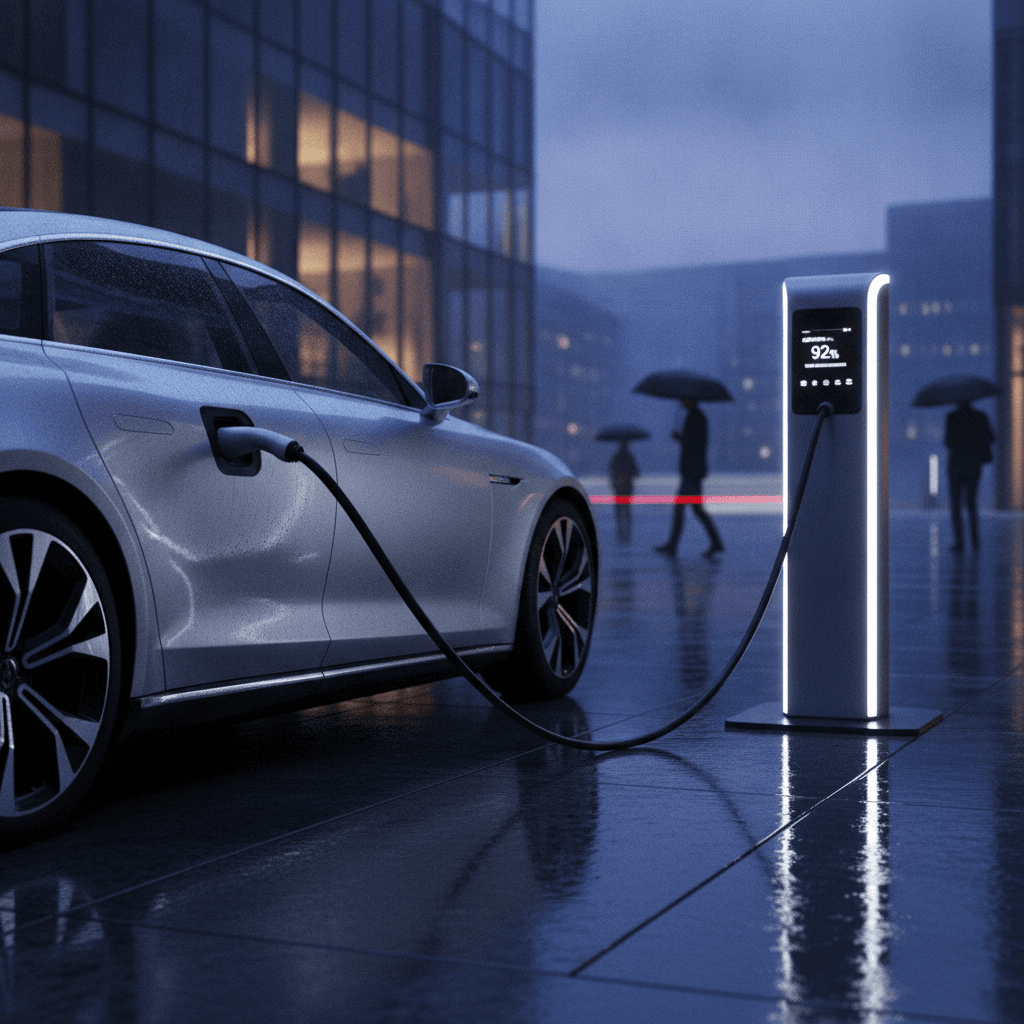
The hybrid icon finally builds an EV
Lexus Korea has opened pre-orders for the eighth-generation All-New ES, with reservations starting September 14 and the official launch set for October 13. The headline isn't the styling or the cabin — it's that the ES nameplate now has a battery EV for the first time in its history.
The lineup spans nine trims: four hybrids and five battery-electric versions. The fact that EV trims outnumber hybrids says a lot about how Lexus Korea intends to sell this car. The electric version is rated at 478 km of range on a single charge, starting at 71.6 million won (roughly $51,000).
Why this matters now
The ES has been around since Lexus launched as a brand in 1989, and in Korea it built its reputation almost entirely on hybrids. Roughly 31% of Lexus Korea's sales come from the ES alone — so putting a BEV into this particular car isn't a side experiment, it's a move on the brand's flagship volume seller.
The strategy behind it is Toyota and Lexus's long-standing "multi-pathway" approach: rather than pivoting hard to EVs only, keep hybrids competitive while offering a battery-electric option alongside. With global EV demand growth having cooled, offering two powertrains under one nameplate and one body is a fairly pragmatic hedge against uncertain demand.
The price positioning
The most striking number is the price gap. At 71.6 million won, the electric ES starts 17.48 million won below the electric Genesis G80 — Hyundai's premium sedan, which has largely owned this segment in Korea. An import brand has now moved beneath a domestic premium EV sedan on price, which is unusual in this market.
Even more notable is the internal pricing. According to Korean reports, the EV trims start lower than the hybrid trims of the same car. Given that EVs typically carry a price premium over their hybrid siblings, this suggests Lexus is prioritizing early volume and market share over per-unit margin. The decision to offer five EV trims versus four hybrids points in the same direction.
What changes for buyers
Anyone shopping for a premium electric sedan in the low-70-million-won range now has one more option — a segment previously split between domestic brands and a handful of smaller imported EVs.
A few caveats are worth keeping in mind. The 478 km figure reflects Korean certification and can vary by trim, and the real out-the-door price depends heavily on national and municipal EV subsidies, which in Korea are tiered by vehicle price and differ significantly by region. Since this is still the pre-order stage, the full trim-by-trim spec sheet and final pricing are best confirmed at the October launch.
The open question
What Lexus is really chasing here is import market share, not the sales figure of a single model. The test is whether the trust it built through hybrids transfers to electric — essentially a conversion-rate problem among loyal owners. How many existing ES hybrid drivers choose an electric ES as their next car will be the clearest early signal of how fast Lexus can electrify in Korea.
Sources
- 렉서스 ES, 첫 전기차 나온다 — mk.co.kr
- 제네시스 G80보다 저렴한 ES 전기차, 렉서스 점유율 높이나 — bloter.net
- 렉서스 8세대 ‘ES’ 출시… 고급 수입 전기차 시장 공략 — donga.com
- 렉서스, 8세대 ‘올 뉴 ES’ 사전계약…전기차 첫 추가 — economist.co.kr
- 렉서스, ‘올 뉴 ES’ 사전계약…첫 전기차 7160만 원 — munhwa.com