Toyota's Next 1.5L Hybrid: What "15% Better" Really Means
What Toyota Announced
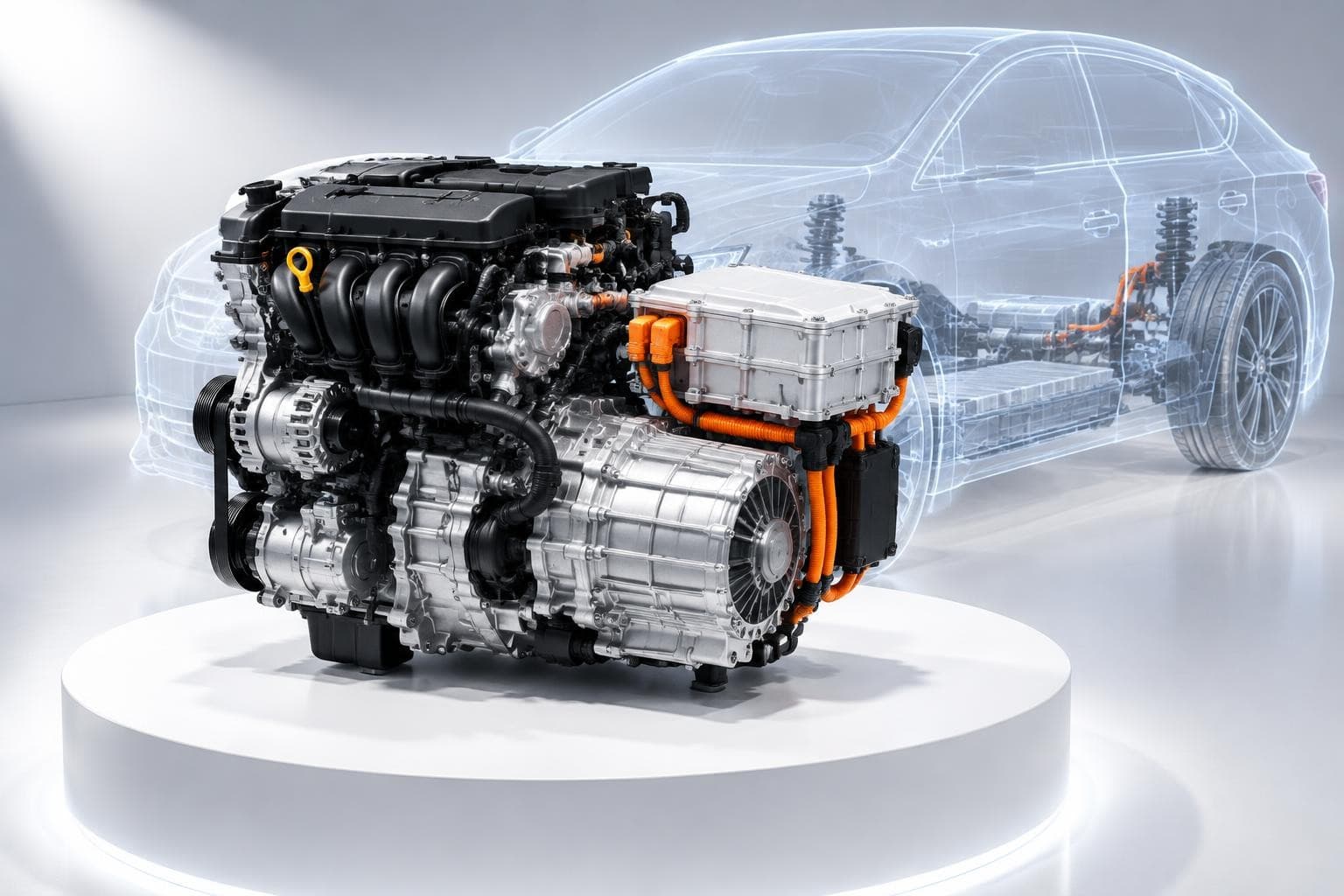
On the 28th, Toyota said it had developed a new high-efficiency hybrid powertrain in-house. At its core is a newly developed 1.5-liter four-cylinder engine, paired with a smaller, lighter motor, power control unit and inverter. The headline figure — a fuel-economy improvement of more than 15% over the existing system — is a development target, not a certified rating on a production car.
The second claim is about packaging. Toyota says it cut the overall volume of the powertrain sharply so the unit can be fitted without compromising battery-electric performance. According to the announcement, the system is designed so that BEV, PHEV and HEV variants can share a single platform.
Why It Matters Now
The expensive part of the electrification transition for legacy automakers is not the technology itself — it is running parallel architectures. Maintaining a dedicated EV structure alongside a combustion-based one doubles up on production lines, parts catalogs and engineering teams. Toyota's pitch, in effect fitting a hybrid into an EV-oriented platform, is an attempt to collapse that duplication into one structure.
For that to work, the hybrid unit has to be physically small. EV-first architectures are laid out on the assumption that there is no engine up front and that the floor is reserved for batteries. Drop a conventionally sized engine-and-transmission package into that layout and either cabin space or battery placement suffers. That is why the volume reduction sits next to the efficiency number in Toyota's messaging rather than as a footnote.
How It Compares to Toyota's Existing Hybrids
Toyota has been refining hybrid systems for decades, which makes a further double-digit efficiency gain hard to extract from any single component. The company's framing — a new engine plus newly downsized motor, PCU and inverter — is consistent with that reality. Still, this remains a stated target, and the announcement does not include certified fuel-economy figures, the models it will go into, or a launch date.
| Item | What was disclosed | | --- | --- | | Engine | Newly developed 1.5-liter four-cylinder | | Co-developed parts | Downsized motor, power control unit, inverter | | Efficiency | More than 15% improvement vs. existing system (target) | | Scope | One platform covering BEV, PHEV and HEV | | Announcement | Officially disclosed on the 28th |
What Changes for Buyers
For anyone shopping today, nothing changes yet. With no model list and no launch timing disclosed, it would be premature to delay a purchase or wait for a specific car on the strength of this announcement. Only the direction is confirmed.
The more meaningful medium-term effect is choice. If a single platform can yield battery-electric, plug-in hybrid and conventional hybrid versions, buyers are more likely to see the same nameplate offered with different drivetrains. For drivers weighing charging access and daily driving patterns against each other, that makes a like-for-like comparison easier than choosing between separate model families.
Reading the Announcement Carefully
- The 15% figure is a target improvement over the existing system, not a certified rating
- No models, pricing or launch timing have been announced
- The volume reduction is framed as a design condition for preserving BEV performance
Sources
- 'EV 플랫폼에 하이브리드'… 토요타, 연비 15% 끌어올린 차세대 파워트... — starnewskorea.com
- 토요타, 차세대 1.5L 하이브리드 개발.⋯연비 15% 이상 개선 목표 — autodaily.co.kr