GM Puts Generative AI in OnStar — and a Life Platform in Your Car
What GM Announced in New York
At its GM Forward event held in New York on October 21 (local time), General Motors laid out a plan to fold AI into OnStar, its global connectivity service. The framing matters as much as the technology: GM is pitching the car less as a means of transport and more as a platform that runs errands on your behalf.
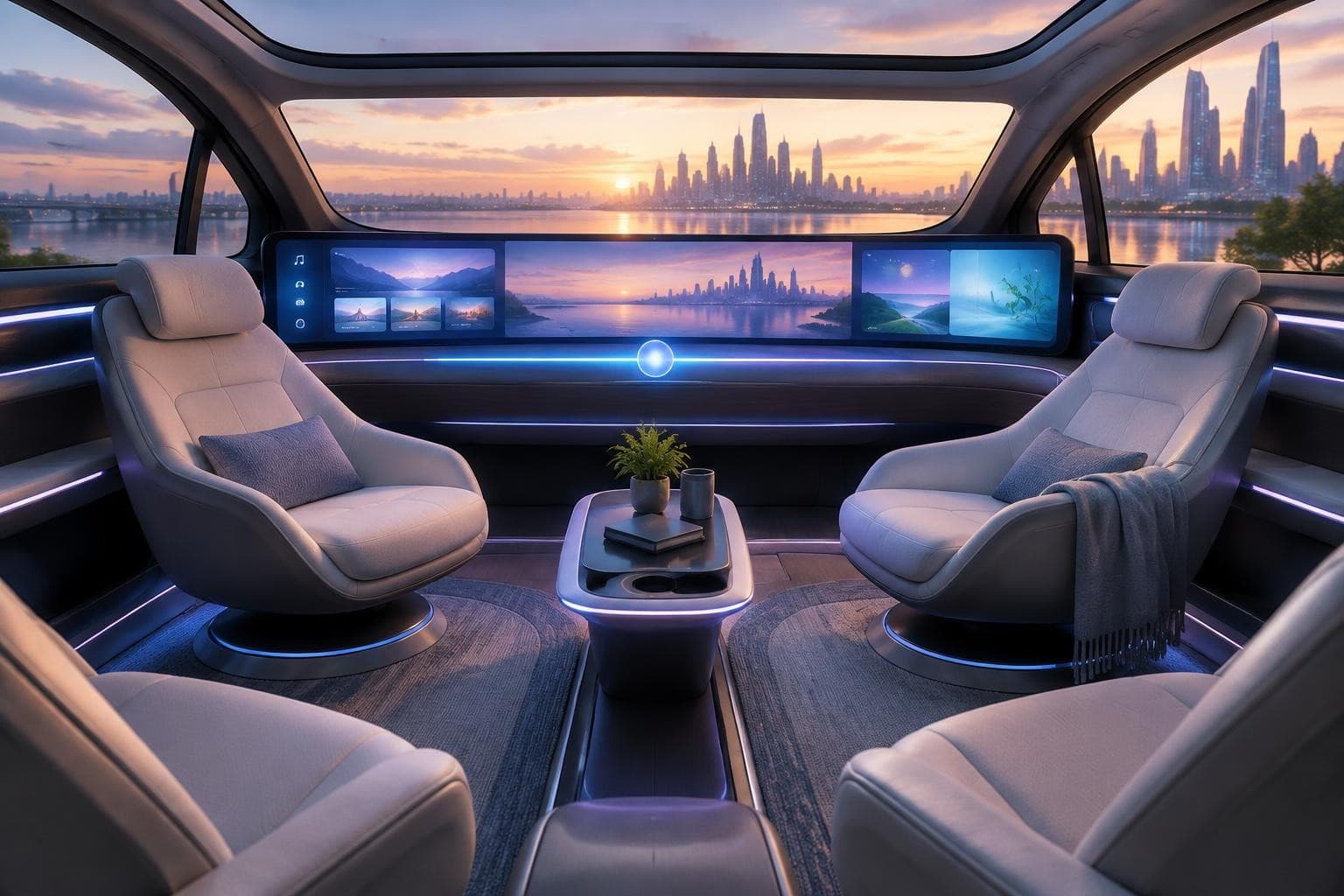
Three pieces were on the table. An AI assistant that controls vehicle functions by voice and explains vehicle status and maintenance needs. A new OnStar app arriving in 2027 that helps coordinate family travel and manage vehicles, including fleet vehicles. And Concept Horizon, a show car meant to illustrate what a cabin looks like once driving no longer demands your attention. Longer term, GM sketched out scenarios where the vehicle parks itself or picks up dry cleaning without a driver on board.
Why Now
The backdrop is a shift in how automakers make money. With hardware margins squeezed by the cost of electrification, software and subscription revenue has become the industry's favored second engine. OnStar is a useful starting point here: launched in 1996, it already has a paying subscriber base built on emergency assistance and remote diagnostics. Layering generative AI onto an existing service is a more practical path to higher revenue per customer than building a new one from scratch.
There's also a competitive squeeze. Mercedes-Benz, BMW and Volkswagen have all shipped conversational AI inside their infotainment systems, while Tesla and Chinese EV makers compete on how fast they can push software updates. GM, having removed Apple CarPlay and Android Auto from its EVs in favor of its own software stack, is in a position where its in-house assistant has to justify that decision.
How This Differs from Rivals
Most in-car AI assistants today amount to a more natural way to press buttons. What stands out in GM's pitch is that the assistant and autonomy are bundled into a single story. Redefining the cabin as a space for work, rest and leisure — and having the car itself handle grocery runs or pickups — puts the emphasis not on the assistant's language skills but on what the vehicle underneath it can physically do.
That premise, of course, depends on driverless capability and the regulation to permit it. GM has already wound down its Cruise robotaxi business and redirected resources toward autonomy in personally owned vehicles. A car that fetches your laundry is therefore best read as a long-range vision rather than a committed product roadmap.
What Actually Changes for Owners
The near-term reality will be far more modest than the concept footage. Settling climate or navigation requests by voice instead of digging through menus, and having the car explain a warning light and whether service is needed, is the first tangible benefit. The fleet management piece is arguably more immediately useful to commercial operators than to individual drivers.
The thing worth watching over time is pricing structure. As connectivity features deepen, the line between what's included in the vehicle price and what becomes a monthly subscription turns into a purchase consideration. No pricing or market-by-market rollout schedule was disclosed, so for buyers outside the US, local availability and language support will likely determine whether any of this is worth paying for.
Sources
- GM, 차 안에 'AI 비서' 넣는다…자율주행 시대 '생활 플랫폼' 승부 — fnnews.com
- GM, 온스타에 AI 접목…2027년 새 앱·자율주행 실내 비전 공개 — etoday.co.kr
- GM, 차에 'AI 비서' 심는다…자율주행 시대엔 장보기·픽업까지 — dailian.co.kr
- GM, 차량에 생성형 AI 입힌다…자율주행 시대 실내 공간도 혁신 — metroseoul.co.kr
- GM, '온스타 AI' 도입…자율주행 시대로 가속 — greened.kr