Fire at a Korean Auto Repair Shop: Why Garages Keep Burning
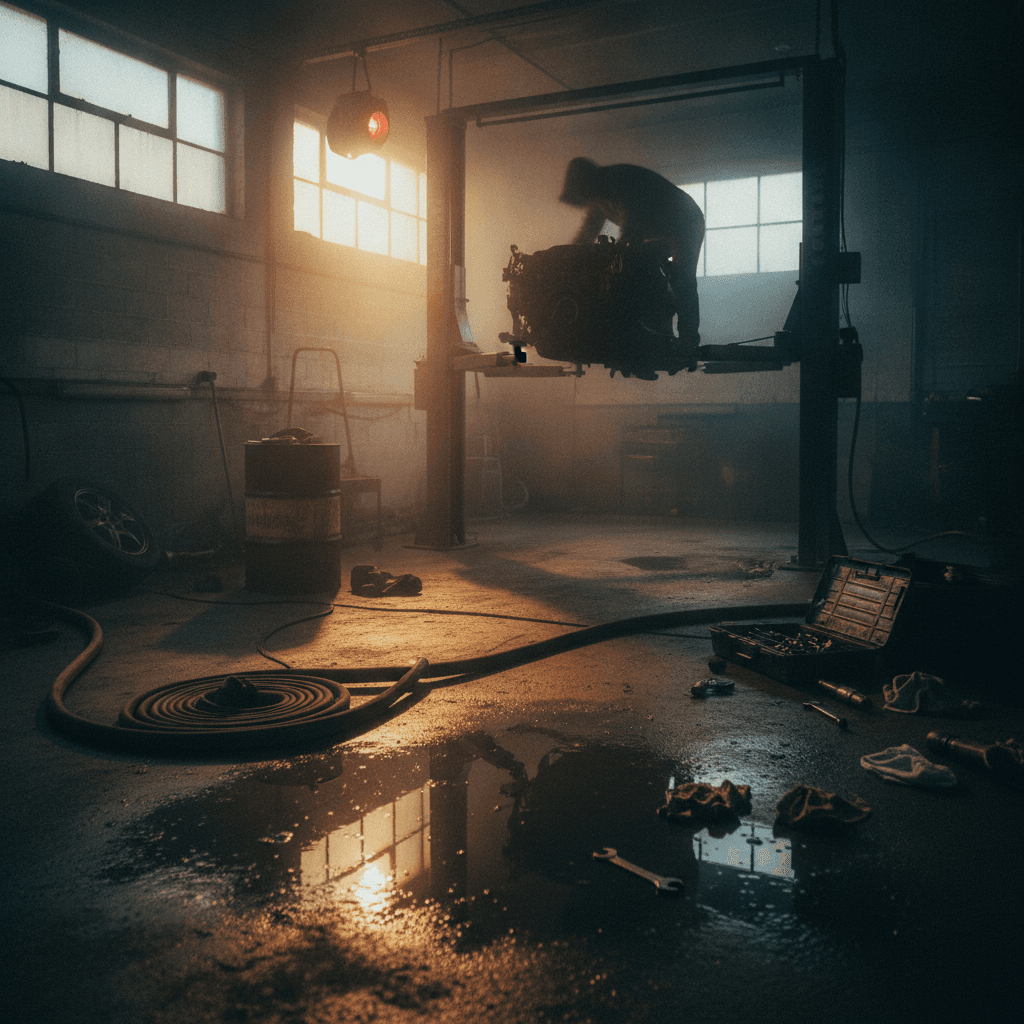
What happened
A fire broke out at an auto repair shop in Jungsan-dong, Gyeongsan — a city in North Gyeongsang Province in southeastern South Korea — at around 8:55 a.m. on October 10. According to the North Gyeongsang Fire Service Headquarters, the main blaze was knocked down by 9:43 a.m., roughly 50 minutes after the first call, with full extinguishment reached about an hour and 50 minutes after ignition. No injuries were reported.
Thick smoke spread into the surrounding area, prompting a string of calls from nearby residents. Firefighters deployed crews and equipment to stop the fire from spreading, and authorities said the cause and the scale of property damage would be investigated once mop-up operations are complete.
Why repair garages are structurally fire-prone
A repair shop is close to a worst-case fire environment by design. Flammable materials — engine and transmission oil, brake cleaner, paint thinner — are stored on site permanently, while spark-generating work such as welding and grinding happens in the same room. Add waste tires, oil-soaked rags and used-oil drums, and you get fuel that spreads fast once ignited.
One more variable has emerged recently. As EVs and hybrids make up a growing share of the Korean vehicle fleet, high-voltage battery work is filtering down to ordinary independent garages that were built around internal-combustion servicing. Lithium-ion fires are notoriously hard to suppress with standard extinguishers because of thermal runaway. That said, the cause of the Gyeongsan fire is still under investigation, and nothing in the available reporting ties it to any specific vehicle or battery.
Why the damage stayed contained
The timeline is the detail worth noting. The main fire was under control in roughly 50 minutes. It started on a weekday morning, when staff were on site to report it immediately, and the visible smoke plume triggered additional calls from residents — both of which compressed response time. Had it started overnight or on a holiday, detection itself could have been delayed. Many of the repair-shop and small-factory fires that end in heavy losses begin in unattended buildings.
What this means if your car is in the shop
If a fire breaks out while your vehicle is in a garage's custody, liability is not automatic. Many Korean repair businesses carry commercial general liability or bailee coverage, which can compensate for damage to vehicles held on their premises — but whether a given shop carries it, and up to what limit, varies widely. For long-stay jobs such as collision repair or bodywork and repainting, asking about that coverage before handing over the keys is a concrete, low-effort precaution.
Your own comprehensive (own-damage) auto policy may also cover fire loss in some cases, though filing a claim can affect your premium at renewal. The practical takeaway is that the useful moment to act is before you drop the car off, not after.
The industry question underneath
Fire-protection requirements for Korean repair shops scale with floor area and business classification, which means the smallest, least capitalized operations are often the ones with the thinnest margin for automatic detection or sprinkler systems. Each time an incident ends with no casualties, the easy conclusion is that it went fine. The more useful one is to re-check the basics — separating flammable storage from the work bay, and running pre- and post-checks around any hot work.
Sources
- 경산 자동차 정비공장 화재 진화 중…인명 피해 없어 — news1.kr
- 경산 자동차정비공장서 화재...인명피해 없어 — newspim.com
- 경북 경산 자동차정비공장서 화재…인명피해 없어 — yonhapnewstv.co.kr
- 경산 자동차정비공장 화재··· 큰 불길 50여 분 만에 잡혀 — dkilbo.com
- 경산 자동차정비공장서 화재…48분 만에 큰불 잡혀 — idsn.co.kr