Auto
Korea to Require EV Battery Diagnostic Data Before Launch
8/19/2026
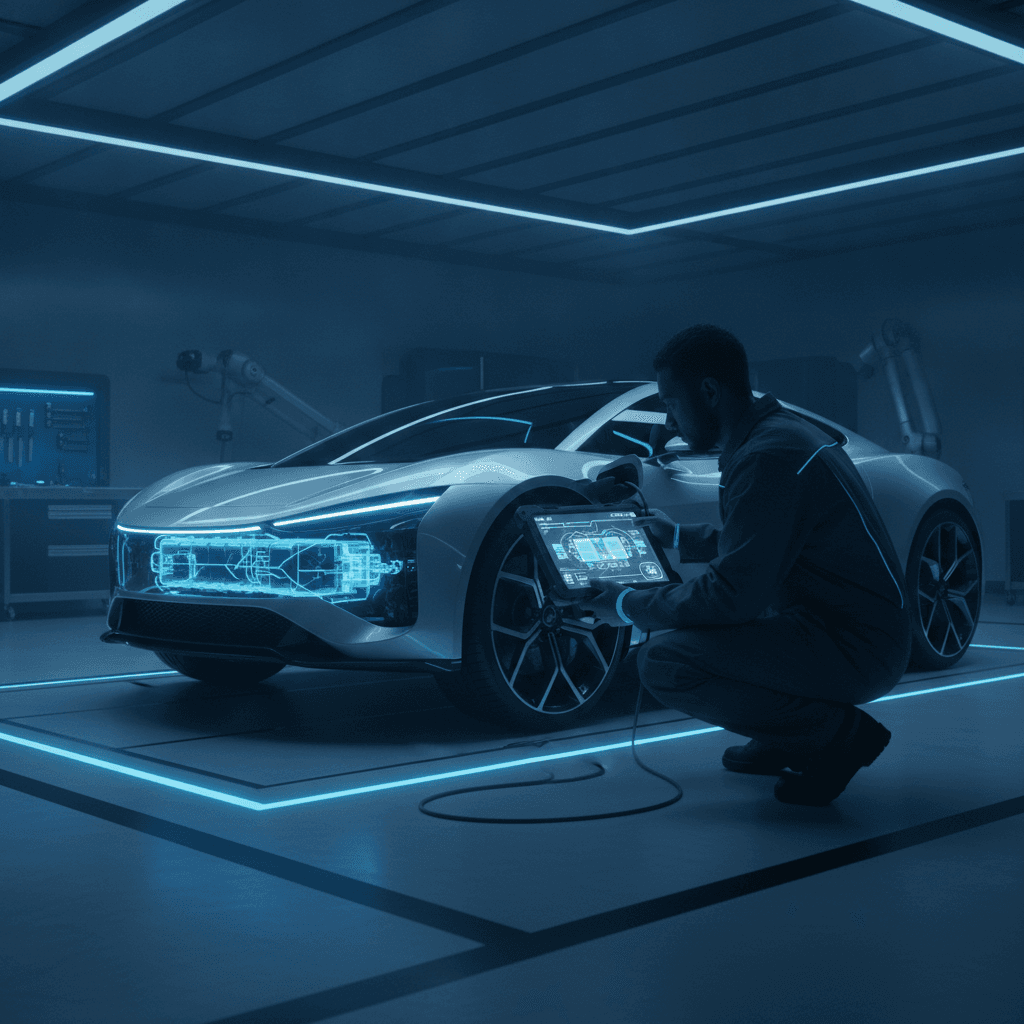
What's Changing
South Korean regulators are reworking how electric-vehicle batteries get inspected, and the central idea is deceptively simple: collect diagnostic data before launch, not after. Until now, the information a testing lab needs to read an EV's battery health has typically been requested once a model is already on the road. The new approach flips that sequence.
The motivation is a very concrete failure mode. If a carmaker shuts down or withdraws from the Korean market after launching a vehicle, there is no longer anyone to request diagnostic data from. Without that data, no one can build the equipment needed to inspect that model's battery — and owners are left with a car whose most expensive component cannot be properly evaluated. Manufacturer insolvency risk translated directly into an inspection blind spot.
Why This Matters Now
An EV battery pack behaves nothing like the components mechanics grew up with. An engine or transmission can be assessed semi-analogue — listen to it, look at the fluid, check for leaks. A battery pack is closer to a sealed black box. Cell-level voltage deviation, internal resistance, thermal history, cumulative charge cycles: all of it lives inside the Battery Management System (BMS), and only the manufacturer knows the protocol and format needed to extract it.
That data also brushes up against trade secrets, which is why the proposed rules reportedly focus on spelling out what must be shared free of charge. A generic obligation to "provide information" is unworkable in practice. Equipment makers need to know which parameters, in which format, and by when — otherwise they cannot design a tester at all.
There is a market-structure angle too. Korea's EV landscape includes domestic giants, established importers, and smaller newcomers. Globally, several EV startups have already run into funding trouble or wound down operations. Framing this as a hypothetical would be naive; regulators are responding to something that has demonstrably happened elsewhere.
What Actually Changes
For owners
The most direct effect is on periodic vehicle inspection. Korea requires cars to pass regular state-mandated inspections, and for EVs the battery portion has been the weakest link. If testing infrastructure can be built around real manufacturer data rather than reverse-engineered guesswork, an owner's inspection result starts to mean something. Today, most drivers estimate remaining battery health from a dashboard readout or from anecdotes on owner forums.
The difference is starkest for people driving a brand that has since exited Korea. A path to checking battery condition survives even when the importer does not.
For the used-car market
The single biggest determinant of an EV's resale value is not mileage or model year — it is state of health (SOH). Because there has been no widely trusted, standardized way to produce that number, pricing has carried a large uncertainty discount. Institutionalizing data access should, over time, widen the base of inspection equipment and reduce distortion in depreciation curves. That said, this depends on testers actually being deployed and data accumulating, so it is a multi-year effect rather than an immediate one.
For manufacturers
For importers and newer brands, this adds a compliance step before a Korean launch. But the direction is consistent with what is happening elsewhere. The EU's battery regulation moves toward a digital "battery passport" carrying a pack's history and status, and right-to-repair debates in both Europe and the US increasingly cover access to diagnostic data. A manufacturer preparing for those regimes is unlikely to find Korea's requirement wildly out of step.
The Open Questions
Three things will determine whether this works.
First, the depth of the data. Handing over a single estimated capacity figure is a completely different proposition from providing cell-level readings and usage history. The diagnostic precision that results is not comparable.
Second, deployment speed. Data secured centrally does not help a driver if inspection stations nationwide lack the hardware to use it.
Third, the balance between disclosure and legitimate commercial confidentiality. BMS algorithms are genuinely competitive assets, and rules that ignore that will meet resistance.
Still, the underlying logic holds up. In an EV, the battery represents a large share of the vehicle's value, and being unable to verify its condition is effectively being unable to verify the asset. Moving data collection earlier is a low-cost way to close a gap that otherwise only becomes visible at the worst possible moment — after a company is gone.
Sources
Sources
- 전기차 배터리 검사 강화…신차 출시 전 진단정보 확보 — munhwa.com